Beyond the Top 3: Why “Vanity Rankings” Are Killing Your South African Lead Pipeline
Open your latest SEO report. Are you staring at a sea of green arrows and number-one rankings, yet your sales team is sitting idle? You are not alone.
Across South Africa, business owners and marketing directors are celebrating top-tier search engine rankings that look fantastic on a dashboard but do absolutely nothing for the bottom line. It is one of the most frustrating disconnects in digital marketing: traffic is up, but revenue is flat.
If this sounds familiar, your business is likely falling victim to “vanity rankings.” Here is why chasing the number-one spot for the wrong keywords is starving your lead pipeline, and how shifting your focus to search intent can completely transform your ROI.
The “90% of Clicks” Myth in 2026
For over a decade, the SEO industry has beaten a specific statistic into the ground: “The top three Google results capture 90% of all clicks.” While technically true in a vacuum, relying on this broad metric in 2026 is a dangerous oversimplification. It operates on a flawed premise: that all traffic is equal. It assumes that a thousand clicks from people mildly interested in a topic hold the same value as ten clicks from people actively looking to spend money.
Traffic does not equal revenue. A spike in your Google Search Console impressions means nothing if those users immediately bounce from your site because they were simply looking for a quick definition, not a service provider.
Decoding Search Intent: The Core Difference
To fix a broken lead pipeline, we have to look past search volume and scrutinise Search Intent—the underlying psychological motivation behind a user’s query.
Keywords generally fall into two main categories that matter for your business:
- Informational (Browsing): The user is researching a problem or educating themselves. (e.g., “what is civil litigation”)
- Transactional (Buying): The user knows what they want and is actively seeking a vendor to provide it. (e.g., “commercial litigation attorney Cape Town”)
The trap that many South African SMEs fall into is heavily optimising for informational keywords. These terms usually have massive search volumes. They look incredibly impressive on an agency report. But they are notoriously terrible at generating immediate leads.
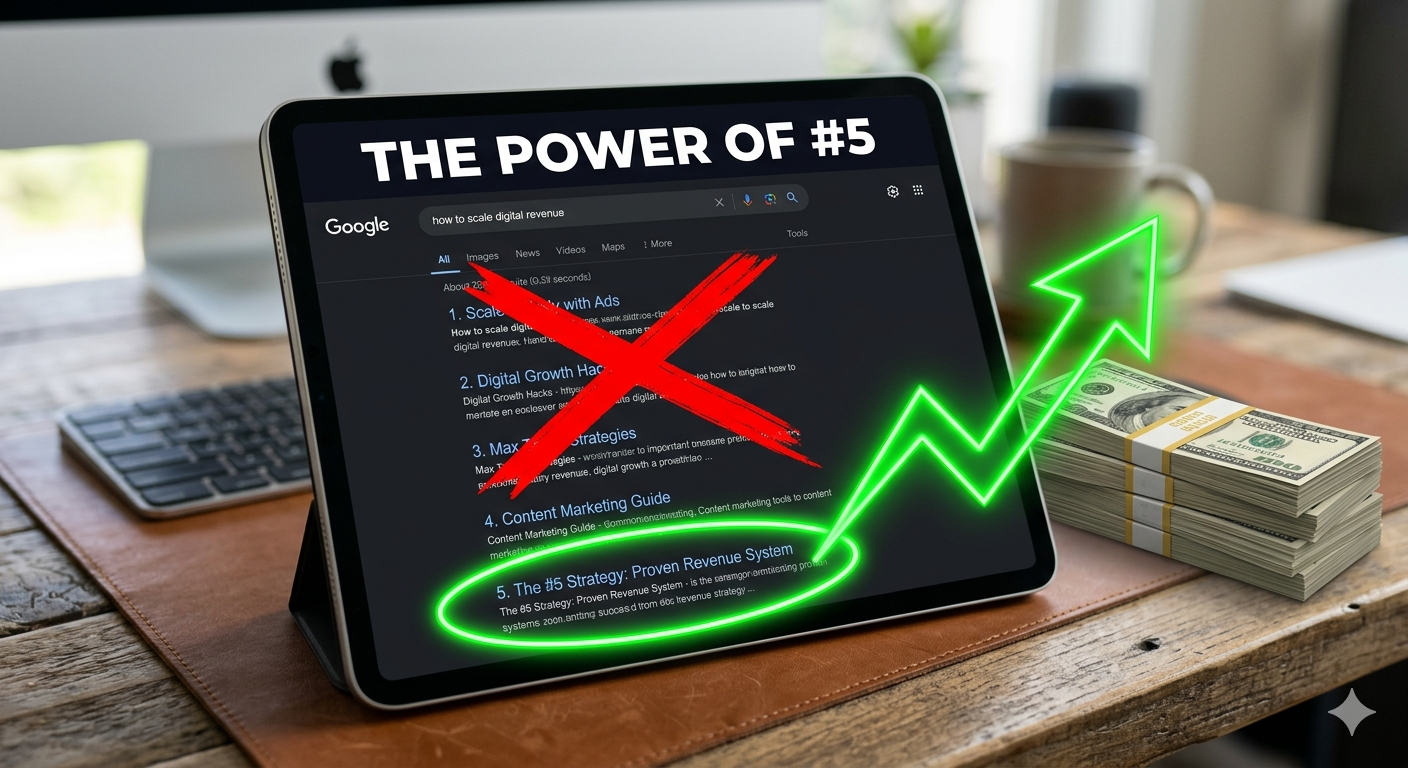
The #1 vs. #5 Scenario: Quality Over Position
Let’s look at a practical, high-ticket example.
Imagine you run a high-end jewellery atelier. Your current agency proudly reports that you are ranking #1 for the phrase “how are diamonds graded.” This keyword brings in thousands of visitors a month. But who is actually typing that into Google? Students doing assignments, curious hobbyists, and consumers who are still months away from making a purchase. Your conversion rate is effectively zero.
Now, consider ranking #5 for the highly specific phrase: “buy custom diamond engagement ring Cape Town.” This keyword might only generate 40 searches a month. However, a user typing this is at the absolute bottom of the sales funnel. They have their credit card ready. They aren’t looking for an education; they are looking for a trustworthy craftsman to build a high-value piece of jewellery.
Ranking #5 for that transactional keyword will generate significantly more revenue than ranking #1 for the informational keyword. The clicks are fewer, but the intent is fiercely commercial. Vanity rankings stroke the ego; intent-driven rankings pay the payroll.
The Danger of Vanity Metrics in Agency Retainers
Unfortunately, the traditional agency model often thrives on vanity rankings. It is much easier (and cheaper) to write generic, top-of-funnel blog posts that rank for high-volume, low-intent informational queries than it is to build the deep, authoritative architecture required to rank for hyper-competitive, high-ticket transactional terms.
Agencies will use these high-volume vanity rankings to justify their monthly retainers, masking the fact that your actual commercial pipeline is empty. They report on “visibility” while ignoring “viability.”
The Solution: Strategic Alignment and E-E-A-T
To stop the bleed, your SEO strategy must align directly with your actual sales process. You need to map out precisely what your ideal, qualified buyers are searching for at the exact moment they are ready to transact.
This requires moving away from superficial keyword stuffing and moving toward entity-based SEO and demonstrating E-E-A-T (Experience, Expertise, Authoritativeness, and Trustworthiness). Google’s algorithms now heavily favour sites that prove they are authoritative entities in their specific commercial niche, not just publishers of generic information.
You must optimise your service pages, technical architecture, and digital footprint to signal unquestionable trust to both the search engine and the high-intent buyer.
This transition from chasing vanity metrics to engineering a revenue-focused architecture is exactly what we facilitate through our specialised SEO consulting services. We don’t report on empty traffic; we engineer pathways that capture qualified leads.
Your Next Step: Audit Your Intent
Stop celebrating the raw number of visitors hitting your site and start interrogating why they are there.
Take a hard look at your top five ranking keywords this month. Are they browsing keywords, or are they buying keywords? If your traffic is high but your phone isn’t ringing, your strategy is misaligned. Don’t let vanity metrics jeopardise your growth. Stop chasing the number-one spot for the wrong reasons, and start dominating the search results that actually drive your business forward.