Load Shedding and SEO: Impact on Traffic Patterns and How to Prepare
As I sit in my Cape Town office, the familiar, low-frequency hum of the inverter kicking in signals another shift to Stage 6. For most South Africans, this is merely a tactical inconvenience—a frantic dash to boil the kettle or plug in the UPS. But for those of us who have been engineering digital growth in this market since 2012, this hum represents a significant, often overlooked disruption in the search ecosystem.
Load shedding is not just a physical or economic crisis; it is a digital disruptor that fundamentally alters how, when, and where our audience interacts with the web. If your SEO strategy assumes a stable, 24-hour linear flow of traffic, you are essentially “dark” to your customers for large portions of the day, even if your servers are humming along in a North American data centre.
In 2026, resilience has become a core component of E-E-A-T (Experience, Expertise, Authoritativeness, and Trustworthiness). If a user can only find you when the lights are on, you aren’t an authority—you’re a fair-weather friend. Here is a technical breakdown of how the energy crisis impacts search patterns and how we can engineer our systems to remain visible in the dark.
The Grid and the Graph: Analysing the Shift
When the power drops in a major economic hub like Sandton or the Cape Town CBD, the impact on your Google Analytics real-time report is instantaneous. However, the data reveals a more nuanced story than a simple “dip” in traffic. We are seeing a dramatic shift in device parity and intent velocity.
Mobile Spikes vs. Desktop Dips
The moment the grid goes offline, desktop traffic—and by extension, high-value B2B conversion activity—flatlines. Users lose their secondary monitors, their high-speed fibre connections, and often their inclination to engage in deep-research tasks.
Simultaneously, we see a massive, concentrated spike in mobile search. This isn’t just “business as usual” on a smaller screen. This is a user on a dying battery, likely dealing with a congested LTE or 5G tower as everyone else in the neighbourhood switches to mobile data. Search intent during these windows becomes hyper-transactional and efficiency-focused. If your content doesn’t answer a query in the first three seconds, that user is gone—they literally cannot afford the battery life or the data to wait for your “cinematic” hero video to load.
The “Catch-up” Surge
One of the most predictable patterns I’ve mapped using Python-driven traffic simulations is the “Catch-up” surge. Approximately 30 to 60 minutes after the power returns to a major zone, traffic doesn’t just return to baseline—it overshoots it. Users who were “offline” for two or four hours rush back to complete tasks, check emails, and finalise purchases. If your high-value content or email newsletters are deploying during an outage in your primary target zone, you are missing the most fertile window for conversion.
Technical Resilience: Optimising for High-Latency Environments
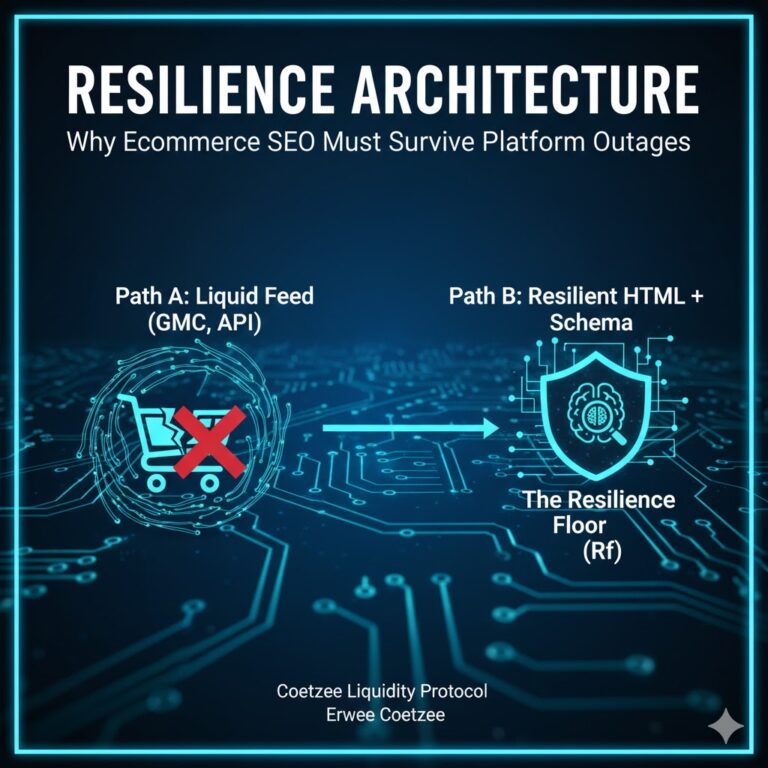
In a stable environment, Core Web Vitals are a ranking factor. In a load-shedding environment, they are a survival factor. When a user is connected to a cell tower that is currently strained by an entire suburb’s worth of traffic, your “Good” PageSpeed score on a fibre connection becomes irrelevant.
Data-Conscious SEO
As systems engineers, we must move toward “Data-Conscious SEO.” This involves a ruthless reduction in the critical rendering path.
- Minimise Heavy Javascript: We are moving away from heavy, client-side rendering. If your site requires 2MB of JS to be functional, it will fail during Stage 6. Prioritise Server-Side Rendering (SSR) to ensure the meaningful content is delivered in the first packet.
- Aggressive Image Payloads: It is 2026; if you aren’t using WebP or AVIF with proper
srcsetattributes, you are penalising your mobile users. During outages, we should even consider “lazy-loading” non-essential CSS. - The Critical CSS Path: Inline your critical CSS to ensure the “above-the-fold” content renders instantly, even on high-latency 3G connections.
Edge Caching and CDNs
To mitigate the strain on local infrastructure, the use of Edge Caching and Content Delivery Networks (CDNs) is non-negotiable. By caching your site’s static assets as close to the user as possible, you reduce the “hops” the data needs to take across a potentially unstable local network.
The “Offline” Signal: Entity SEO and Google Business Profiles
Search engines are increasingly looking for signals of “real-world” activity to determine trust. In South Africa, your ability to communicate your operational status during load shedding is a massive trust-builder.
Managing Local Entity Signals
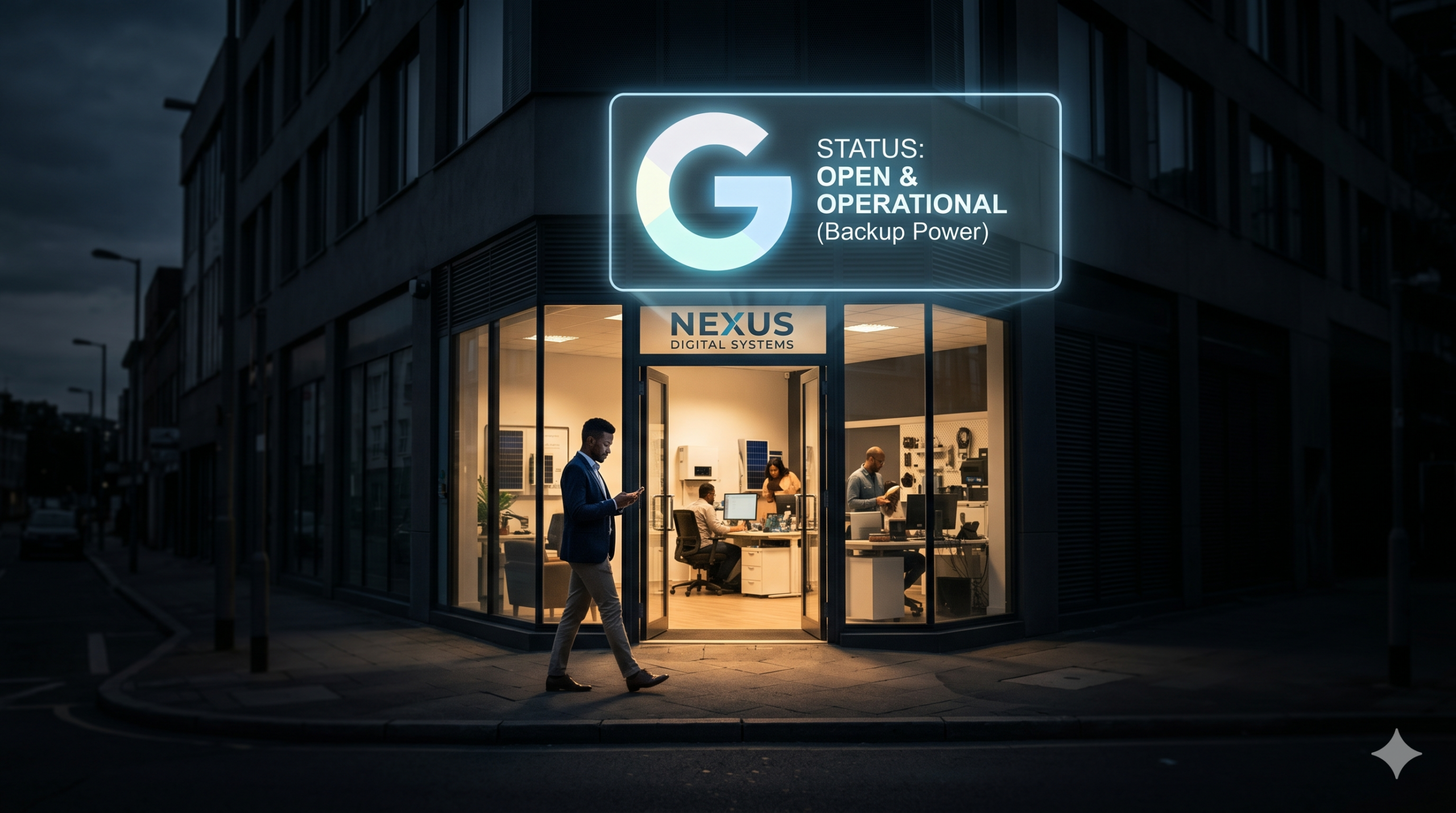
Your Google Business Profile (GBP) is your most vital tool for “offline” communication. If your physical store or office is closed during specific Stage 6 windows, but your GBP says “Open,” you are creating a negative user experience that Google’s local algorithm will eventually penalise through lower “intent-to-visit” scores.
We use Google Updates to communicate resilience. Posting a quick update like “Our Sandton showroom is fully operational on solar/inverter power during scheduled outages” isn’t just a courtesy; it’s a local entity signal that tells the algorithm you are more reliable than the competitor down the road who has gone dark. This builds Trustworthiness, the most critical pillar of E-E-A-T.
Strategy: The Systems Engineer Approach
To truly master SEO in this climate, we have to stop thinking like copywriters and start thinking like systems engineers.
Python-Driven Automation
In my practice, we use Python scripts that hook into load-shedding APIs (such as EskomSePush) to monitor the schedules of major economic hubs. This allows us to automate “Grid-Aware Content Delivery.”
- Scheduled Deployment: We no longer publish high-stakes articles or launch campaigns at a generic “09:00 AM.” We time deployments for the “Golden Hour”—the window where the highest concentration of our target audience in Johannesburg and Cape Town is confirmed to have power.
- Ad Spend Throttling: We use scripts to automatically lower Google Ads bids in areas experiencing outages, reallocating that budget to the “Catch-up” surge or to regions currently on the grid. This ensures your ZAR budget is spent when the conversion probability is highest.
Conclusion: Resilience as a Competitive Advantage
SEO in South Africa is no longer just about keywords and backlinks. It is about availability. The energy crisis has forced a Darwinian evolution in our digital market. The businesses that will dominate the search engine results pages in 2026 are those that realise a website is a living entity that must adapt to its environment.
By optimising for mobile-first, low-data environments and synchronising your content strategy with the national grid, you aren’t just “doing SEO.” You are building a resilient brand that users—and search engines—can trust when everything else goes dark.
Is your digital infrastructure grid-ready? If you haven’t audited your mobile performance under high-latency conditions or mapped your traffic patterns against load-shedding schedules, you are losing visibility every time the lights go out. It is time to move beyond standard audits and engineer a strategy built for the South African reality. Reach out for a technical “Grid-Readiness” audit today.