Engineering Trust: How to Structure Your Legal Firm’s Entity Data for Gemini
In the legal profession, reputation is your most valuable asset. For centuries, the trust dynamic for law firms was built on physical presence, case outcomes, and professional referrals. Today, however, the primary gatekeeper for new client acquisition has shifted from the local town square to the global AI knowledge graph.
If your firm possesses deep expertise, high-court victories, and a decades-long track record, but your website fails to make this reputation “legible” to AI search engines like Gemini or Perplexity, you are effectively invisible to the modern client.
At SEO Gurus, we believe that legal authority in the AI age is not a matter of keyword density; it is a matter of semantic entity-legibility.
The Entity-Legibility Gap
Most legal websites are structured for human eyes and traditional search engines that rely on keyword matching. They list practice areas, partner bios, and news sections in a way that is aesthetically pleasing but fundamentally opaque to AI.
AI search models do not “read” your website like a human. They ingest it as a collection of entities—people, courts, legal outcomes, and professional affiliations—and map the relationships between them. If your firm’s website is not explicitly telling the AI that “Attorney X” achieved “Outcome Y” in “High Court Z,” the AI cannot incorporate your firm into its knowledge graph as an authoritative entity.
The Methodology: Forensic E-E-A-T through Structured Data
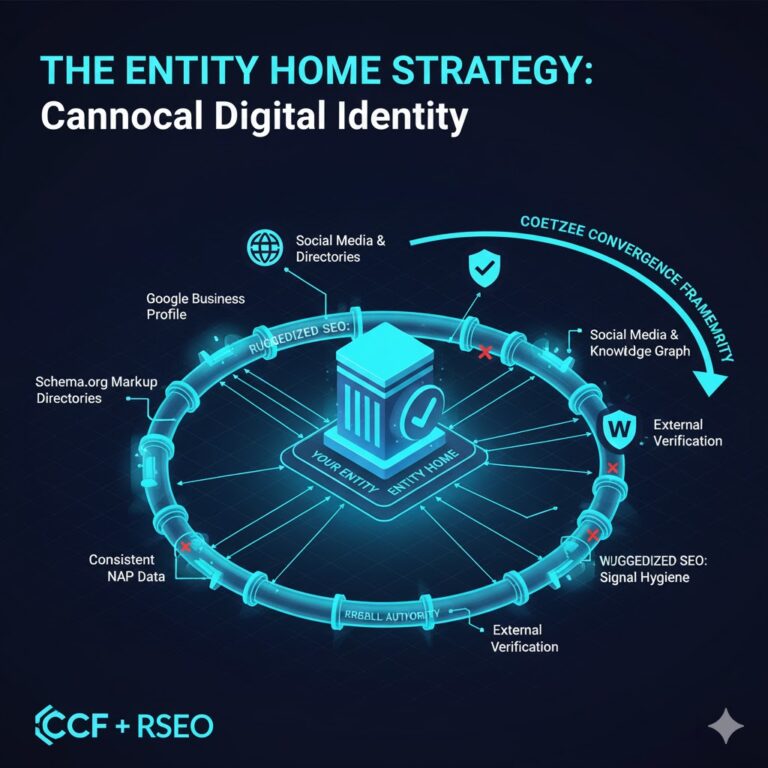
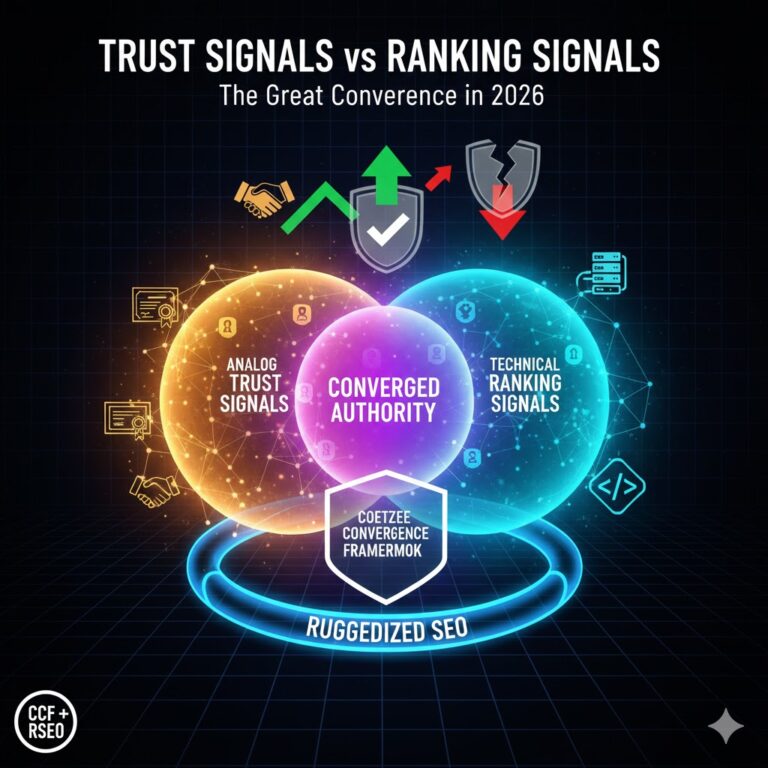
To bridge this gap, we employ Entity-Based Search Optimization. This is a core component of the Coetzee Convergence Framework (CCF), moving beyond surface-level SEO to provide machines with the precise, verified data they need to index your expertise.
Structuring Your Authority
We transform your firm’s historical performance into machine-readable JSON-LD schema markup:
- Person Entities: We structure partner profiles to include specific bar admissions, academic pedigree, and decades of service.
- Case Outcome Entities: We map high-court judgments and shareholder dispute resolutions as discrete events, linking the firm directly to the legal precedent.
- Entity Linking: We ensure your firm is connected to the relevant professional bodies and local courts within the Western Cape and beyond, solidifying your place in the local knowledge graph.
The Economic Bridge: Why Authority Equals Acquisition
In the CCF model, structured data is a capital asset. When you make your firm “legible” to AI, you are not just optimizing for search—you are reducing the cost of client acquisition.
By feeding the AI verifiable data on your track record, you bypass the “keyword noise” and present your firm as a primary authority. When a prospective client asks an AI for legal guidance regarding a shareholder dispute or business rescue in the Western Cape, your firm’s entity is far more likely to be cited as a trusted, authoritative source.
Strategic Insight: Documenting the Precedent
The competitive advantage of the 2026 legal market belongs to firms that treat their case archives as a structured database rather than a static blog roll. Documenting high-court outcomes as structured data allows you to claim “expert entity” status in the eyes of the AI models that your potential clients now consult daily.
Legal Authority in the AI Age
The era of relying solely on broad, keyword-heavy search strategies is ending. The future belongs to firms that can articulate their value—precisely and structurally—to the machines that dominate the information landscape.
The goal is not to rank for the word “lawyer.” The goal is to be indexed as the authority on your specific legal practice.
Is your firm’s reputation being ignored by AI search engines? Explore the Coetzee Convergence Framework to learn how we engineer entity-based authority for high-trust legal practices.