The 20-Keyword Starter System for Small Businesses
Most small businesses overcomplicate keyword research.
They open a tool.
They see thousands of suggestions.
They download a spreadsheet.
Then they do nothing.
The problem is not effort.
The problem is structure.
You do not need 500 keywords to build SEO momentum.
You need 20 well-chosen keywords, mapped correctly, aligned to intent, and structured into the right pages.
This article gives you a beginner-friendly system you can complete in under 90 minutes.
Why Small Businesses Get Stuck
Most advice online assumes:
- You are building a media company.
- You have time for 100 blog posts.
- You understand advanced clustering software.
Most small businesses:
- Have 5–10 core services.
- Need leads, not traffic.
- Have limited time.
The goal is not volume.
The goal is clarity.
Transactional vs Informational (In Plain English)
Before choosing keywords, understand intent.
Transactional Keywords
These signal buying or booking intent.
Examples (Local Plumber):
- Emergency plumber Cape Town
- Burst pipe repair near me
- Plumbing quote Cape Town
Examples (eCommerce Store):
- Buy hiking backpack South Africa
- Waterproof trail shoes price
- Camping stove online
These belong on:
- Homepage
- Service pages
- Product pages
They generate revenue.
Informational Keywords
These signal research or problem awareness.
Examples (Local Plumber):
- How to fix a leaking tap
- Why is my geyser making noise
- What causes low water pressure
Examples (eCommerce Store):
- Best hiking backpacks for beginners
- How to choose a sleeping bag
- What size tent do I need
These belong on:
- Blog posts
- Guides
- FAQ sections
In an AI search environment, informational content increases citation potential and trust.
You need both types.
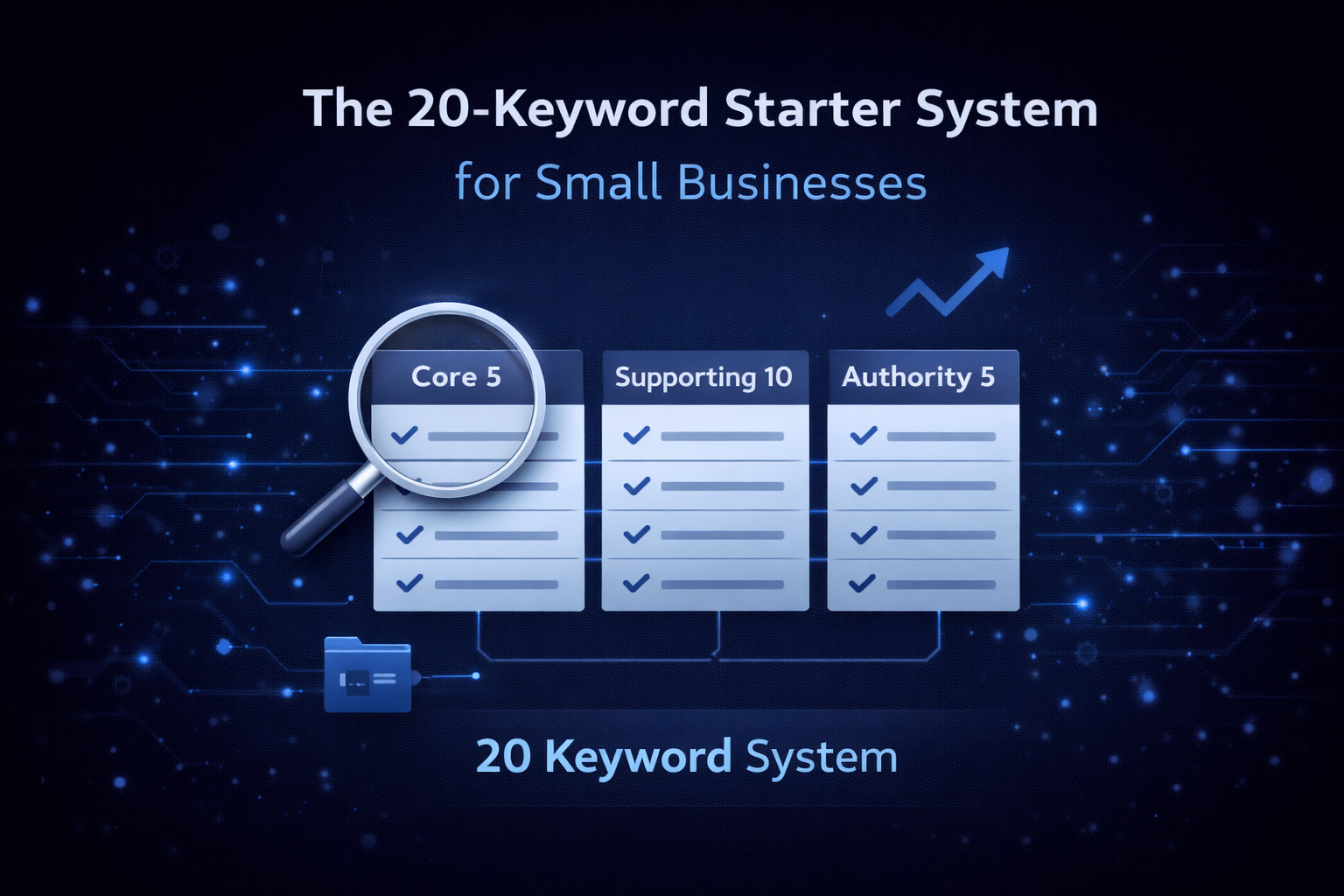
Step 1: Choose Your Core 5 Transactional Keywords
These are your money pages.
Start by answering three questions:
- What do you primarily sell?
- Who is it for?
- Where do you operate? (if local)
Now build five variations.
Example (Local Electric Fence Installer – Cape Town)
- Electric fence installation Cape Town
- Electric fence repair Cape Town
- Electric fence maintenance service
- Electric fencing quote Cape Town
- Perimeter security installation
Example (Online Outdoor Store)
- Buy hiking backpacks online
- Camping gear South Africa
- Trail running shoes waterproof
- Portable camping stove
- Lightweight hiking tent
Keep it simple.
If a keyword directly generates revenue, it belongs in your Core 5.
Step 2: Add 10 Supporting Intent Keywords
These strengthen authority and help AI systems understand your expertise.
Choose keywords from these categories:
- Cost questions
- Comparison queries
- “How it works”
- Problem-based searches
- Decision-stage questions
Example (Electric Fence Business)
- Electric fence installation cost
- How does an electric fence work
- Electric fence vs wall security
- Is electric fencing safe for pets
- How long does electric fencing last
- Electric fence maintenance tips
- Electric fence compliance requirements
- Best electric fence for coastal areas
- Electric fence troubleshooting
- How much voltage does electric fencing use
These can become:
- Blog posts
- FAQ sections
- Expanded service page content
Supporting keywords build structure around your Core 5.
Step 3: Add 5 Authority-Building Long-Tail Topics
These are deeper, highly specific queries.
They:
- Build trust.
- Improve extractability.
- Increase citation likelihood.
Example (Local Service)
- How to maintain electric fencing in coastal climates
- What to check before installing electric fencing
- Signs your perimeter security needs upgrading
- How long does electric fence wiring last
- Can electric fencing work during load shedding
Example (eCommerce)
- What size backpack for a 3-day hike
- How to pack a hiking backpack properly
- Best camping stove for windy conditions
- How to waterproof trail shoes
- Lightweight vs heavy-duty tents comparison
These topics position you as knowledgeable, not just selling.
Intent Clustering (Without Overcomplicating It)
Intent clustering means grouping similar phrases onto one page.
You do NOT create separate pages for:
- Electric fence price
- Electric fence cost
- Electric fencing quote
They all serve one intent: pricing.
One page can rank for variations.
Search systems understand semantic similarity.
Your job is to match intent — not duplicate wording.
Mapping Your 20 Keywords to Pages
Here is the clean system:
Homepage
- 1 primary transactional keyword
- Clear entity statement
Service or Product Pages
- Remaining Core 5 keywords
- Cost-related variations
- Comparison variations
Blog or Guide Content
- 10 supporting informational keywords
Authority Guides
- 5 deep long-tail topics
Structure example:
Homepage → “Electric Fence Installation Cape Town”
Service Page → “Electric Fence Repair”
Blog Post → “Electric Fence Installation Cost Guide”
Guide → “Maintaining Electric Fencing in Coastal Climates”
Every keyword must belong to a page.
If it doesn’t, remove it.
Avoiding Vanity Terms
Vanity keywords look impressive but rarely convert.
Examples:
- “Security”
- “Shoes”
- “Camping”
They are:
- Too broad
- Too competitive
- Not buyer-aligned
Instead of:
“Camping”
Target:
“Lightweight hiking tent South Africa”
Instead of:
“Plumbing”
Target:
“Emergency plumber Somerset West”
Specific beats broad.
Always.
The 20-Keyword Worksheet
Copy and fill this in.
CORE 5 (Transactional)
SUPPORTING 10 (Intent-Based)
AUTHORITY 5 (Long-Tail Depth)
If you cannot map all 20 to real pages, refine them.
Why This Works
This system works because it:
- Aligns with buyer intent.
- Avoids overwhelm.
- Builds structure.
- Supports AI extractability.
- Creates momentum quickly.
You do not need 200 keywords to start ranking.
You need:
- Clear service focus.
- Proper page mapping.
- Structured execution.
Complexity delays progress.
Clarity builds traction.
Final Perspective
Most small businesses stall because they chase tools.
The winners focus on structure.
Twenty focused keywords:
- Clarify your website.
- Guide your content.
- Improve authority.
- Support AI citations.
- Drive actual leads.
If you want the full beginner execution framework — including page templates, AI-citation formatting rules, and a 30-day deployment plan — it is laid out step-by-step in the Advanced SEO Handbook.
Start small.
Execute clearly.
Let structure compound.