Brand SERP Optimisation: How to Own Your Knowledge Panel and Control Your Digital Business Card
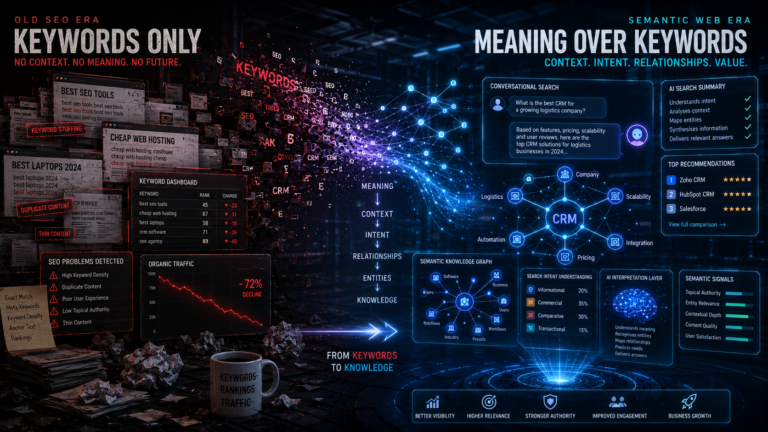
In the contemporary search landscape, the traditional dichotomy between “organic rankings” and “paid search” has been superseded by a more profound architectural reality: the transition from a document-based index to an entity-based knowledge engine. For the modern enterprise, the search engine results page (SERP) is no longer merely a list of links directing users to a website; it is a dynamic, multi-dimensional interface of a Knowledge Graph entity.
When a stakeholder, a prospective client, or a high-value partner searches for your organisation by name, they are not looking for your website in isolation. They are interacting with your digital identity as perceived and structured by global information retrieval systems. This “Brand SERP” is your definitive digital business card. It is a public-facing node in Google’s Knowledge Graph, and if you are not actively engineering its surface, you are leaving your corporate reputation to the vagaries of algorithmic inference.
The objective of a sophisticated digital strategy is not simply to rank a homepage at position one. The objective is viewport ownership—the systematic control of every pixel, every knowledge fragment, and every third-party citation that appears when your entity is queried. This guide outlines the strategic framework required to transition from passive search presence to active entity dominance.
1. The Anatomy of a Brand Entity
To control a Brand SERP, one must first understand how a search engine recognises an organisation as a distinct entity rather than a mere collection of keywords and backlinks. In the era of the Knowledge Graph, Google distinguishes between a website (a digital location) and an entity (a uniquely identifiable thing or concept).
The Ontology of Identity
An entity is defined by its attributes and its relationships to other entities. Google assigns a Machine-Readable Entity ID (MREID) to recognised organisations. This ID is the “source of truth” that aggregates data from disparate sources into a single, cohesive profile. Recognition occurs through a process of entity disambiguation, where the engine determines precisely which “Apple” or “Apex” the user is seeking based on contextual signals and historical data.
Entity Identifiers and Salience
Salience is the measure of how important an entity is within a specific corpus of text or a topical ecosystem. High salience is achieved through consistent corroboration across authoritative nodes. Google does not simply “trust” your website’s “About Us” page; it looks for a “reconciliation of signals.” If your brand name appears in a corporate registry, is discussed in top-tier financial press, and is linked to a founder with a high Author Vector, the confidence score of that entity increases.
Triggering the Knowledge Panel
The Knowledge Panel—the information box appearing on the right side of desktop search results—is the ultimate manifestation of entity recognition. It is triggered only when the Knowledge Graph reaches a high threshold of confidence and corroboration. Brands that remain plain links lack the necessary “entity gravity.” This gravity is built through three primary layers:
- The Foundational Layer: Structured data (Schema.org) that explicitly defines the entity’s attributes.
- The Corroboration Layer: Third-party validation from high-authority databases like Wikidata, DBpedia, and industry-specific registries.
- The Media Layer: Consistent citations in authoritative news outlets and trade publications that establish real-world relevance.
2. The Brand SERP as a Digital Business Card
If the website is your storefront, the Brand SERP is the lobby of your headquarters. It shapes perception before a user ever clicks through to your owned media. In an enterprise context, controlling this surface is an exercise in Reputation Architecture.
Components of a Dominant Surface
A dominant Brand SERP is characterised by the displacement of third-party noise in favour of controlled, authoritative features. Strategic architects focus on owning the following components:
- Sitelinks: Deep-link expansions that allow users to navigate directly to high-value internal silos (e.g., login portals, product categories, or contact pages).
- People Also Ask (PAA): Managing the semantic narrative by ensuring that the questions appearing in this section are answered by your owned content or favourable third-party profiles.
- Video and Social Carousels: Integrating visual media directly into the SERP to increase the brand’s visual footprint and engagement.
- Review Aggregators: Ensuring that third-party sentiment nodes (Trustpilot, Glassdoor, Google Business Profile) reflect a curated, positive narrative.
Viewport Ownership
The goal is to occupy the maximum possible “above-the-fold” real estate. On mobile devices, a well-optimised entity can occupy 100% of the initial viewport. This level of dominance serves as a defensive barrier, pushing potentially negative or irrelevant results (such as competitor ads or outdated forum threads) down to the second or third screen.
3. Entity Authority and the Knowledge Graph
Google’s Knowledge Graph is a probabilistic engine. It operates on confidence scores. Every piece of information Google “knows” about your brand is weighted by its perceived reliability.
Confidence Scores and Semantic Corroboration
Entity authority is not built through link volume; it is built through semantic corroboration. If your organisation claims to be a “Leader in E-commerce Digital Infrastructure”, Google validates this by looking for co-citations. Does your brand name frequently appear in the same paragraph as other established entities in the e-commerce space? If so, the semantic distance between your brand and the “E-commerce” node shrinks, increasing your authority within that specific topic.
Entity Gravity
Stronger entities possess a higher “entity gravity,” which naturally attracts structured SERP features. This is a virtuous cycle: the more the Knowledge Graph understands your entity, the more rich features it displays; the more rich features it displays, the more user interaction data it collects, which in turn reinforces entity confidence. For enterprise SEO leads, the strategy must be to move the brand from a peripheral node to a central “hub” node within its industry’s sub-graph.
4. The Corroboration Layer
A fundamental rule of the Knowledge Graph is that self-published content is insufficient for entity establishment. Google treats your website as a biased source. To reach the confidence threshold required for a Knowledge Panel, you must engineer a layer of third-party corroboration.
The Role of Wikidata and DBpedia
Wikidata is the structured data backbone of the internet. It provides a machine-readable, language-agnostic identifier for entities. Establishing a Wikidata item for a brand is often the single most effective way to trigger a Knowledge Panel without a traditional Wikipedia page. It allows you to explicitly state founders, parent organisations, and key identifiers (like LEI codes or social handles) in a format Google’s Knowledge Vault can ingest directly.
Authoritative Media and Registries
Corroboration also stems from “independent” nodes. This includes:
- Authoritative News: Citations in global outlets (Bloomberg, Reuters, Forbes) or high-tier industry journals.
- Corporate Registries: Official filings that verify the physical and legal existence of the entity.
- Industry Directories: Professional databases (Crunchbase, AngelList, or niche-specific registries like the GIA for jewellery retailers) that provide additional data points for triangulation.
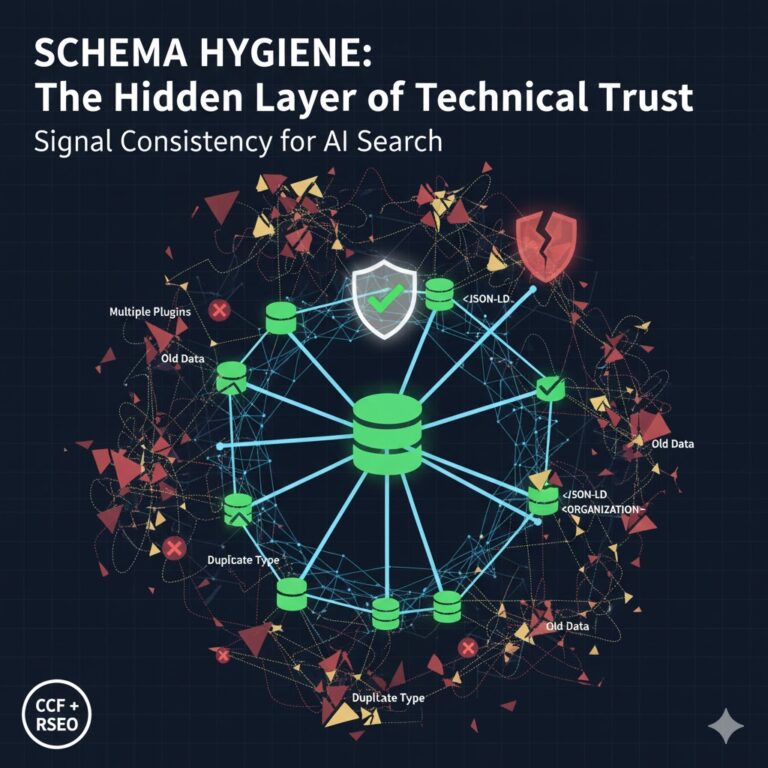
5. Schema as an Entity Declaration Layer
While third-party corroboration is the “proof,” Schema.org is the “declaration.” It is the process of telling the search engine exactly who you are and how you relate to the world in its own language.
Organisation and Person Schema
For enterprise organisations, schema implementation should be centralised around a central entity node. Using Organisation schema on the homepage and Person schema for key leadership (founders and executives) allows you to define the internal hierarchy of the entity.
Relationship Modelling and sameAs
The sameAs property is the most powerful tool in the schema toolkit. It acts as an explicit instruction to “reconcile this node with that node.” By linking your Organisation schema to your Wikidata item, your LinkedIn profile, and your Google Business Profile, you are consolidating your digital footprint into a single, unified entity.
Strategic Note: Schema is a corroboration signal, not a traditional ranking factor. It does not “make you rank higher” in the lexical sense; it makes you “more understandable” in the semantic sense, which is a prerequisite for rich SERP features and Knowledge Panel triggers.
6. Brand SERP Defence (Reputation Architecture)
A dominant Brand SERP is inherently defensive. By occupying the SERP with controlled nodes—such as your official social profiles, verified review platforms, and sitelink-enabled main pages—you create a “buffer zone” that suppresses unwanted results.
Suppressing Negative Surfaces
Negative press or forum discussions thrive in the “information vacuum” left by under-optimised brands. If you only own two or three links on your Brand SERP, the algorithm will fill the remaining seven or eight spots with whatever it finds. By proactively building out a robust entity surface, you ensure that even if negative content arises, it is relegated to the lower reaches of the SERP, where its impact on reputation and click-through rate is significantly diminished.
Managing Knowledge Panel Accuracy
Once a Knowledge Panel is triggered, it must be “claimed.” This allows the organisation to suggest changes and influence the “semantic narrative.” Monitoring the Knowledge Panel for inaccuracies—such as incorrect social links or outdated headquarters data—is a critical maintenance task for Digital Reputation Architects.
7. Brand Entity Audit Framework
This framework is designed for enterprise-level diagnostics to identify fragmentation and opportunities for entity consolidation.
I. Entity Recognition Signals
- Knowledge Panel Status: Is a Knowledge Panel present? Is it claimed? Is it comprehensive (social links, founders, description)?
- Google Knowledge Graph Search API Check: Does the brand have a unique MREID? What is the confidence score associated with the ID?
- Entity Disambiguation: Does a search for the brand name require disambiguation (e.g., “Showing results for…”)?
II. Corroboration Sources
- Wikidata Presence: Is there a dedicated Wikidata item? Is it fully populated with external identifiers?
- Authority Footprint: Are there citations in Tier 1 media outlets? Are these outlets linked to the entity through
sameAsor unlinked mentions? - Registry Alignment: Does the brand name and address match exactly across corporate registries and the Google Business Profile?
III. Structured Data Completeness
@graphImplementation: Is schema implemented as a unified graph or as fragmented snippets?- Founder/Executive Linkage: Are key personnel linked to the organisation via
worksFororfounderproperties? - Identifier Consistency: Are
sameAslinks consistent across all primary pages?
IV. Brand SERP Feature Coverage
- Sitelink Health: Are the displayed sitelinks the most valuable pages for the brand?
- Social Attribution: Are all verified social profiles appearing in the Knowledge Panel or as rich results?
- PAA Ownership: Who owns the answers to the top three “People Also Ask” queries for the brand?
V. Reputation Surface Vulnerabilities
- Sentiment Node Analysis: What are the ratings on the first three visible review platforms?
- Third-Party Noise: Are there forums, Reddit threads, or outdated news articles on the first page?
- Competitor Encroachment: Are competitors bidding on the brand name or appearing in “People Also Search For”?
8. Organisation-as-Entity-Hub Schema Architecture
The following JSON-LD illustrates the architectural logic of using the organisation as the central hub of a knowledge graph.
Illustrative Schema Architecture — Not Copy-Paste Ready
9. Strategic Roadmap: Owning the Entire Brand SERP
This roadmap is designed for enterprise SEO teams to execute over a 6-to-12-month cycle.
Phase 1: Entity Consolidation (Months 1-2)
- Perform a full Brand Entity Audit.
- Claim and verify all primary entity nodes (Google Business Profile, Bing Places, major social handles).
- Standardise brand naming, address, and contact details (NAP) across every digital touchpoint to prevent entity fragmentation.
Phase 2: Structured Data Alignment (Months 3-4)
- Deploy a centralised
@graphschema architecture on the homepage. - Establish
sameAslinks to all verified profiles. - Implement
Personschema for the leadership team to build Author Vectors.
Phase 3: Corroboration Building (Months 5-8)
- Secure a Wikidata item and populate it with cross-platform identifiers.
- Execute a Digital PR campaign focused on Tier 1 industry publications to earn high-authority citations and unlinked mentions.
- Audit and update industry directories (Crunchbase, G2, etc.) to ensure data parity.
Phase 4: Content Architecture and Feature Acquisition (Months 9-12)
- Optimise for Sitelinks by improving site navigation and internal linking to core silos.
- Develop content specifically designed to answer “People Also Ask” queries associated with the brand.
- Monitor and refine the Brand SERP to suppress noise and maintain viewport ownership.
Conclusion
Owning your Brand SERP is no longer optional. In an AI-driven search ecosystem where Perplexity, ChatGPT, and Google’s AI Overviews synthesise answers from the Knowledge Graph, the clarity and authority of your brand entity are the primary determinants of your visibility.
A Brand SERP is not a static result; it is a living, breathing interface of your organisation’s digital reputation. By shifting from a document-centric approach to an entity-centric architecture, you move beyond the volatility of ranking algorithms and into the stability of Knowledge Graph dominance. This is the foundation of modern search authority and the ultimate defence for your digital business card.
About the Author
Erwee Coetzee is the founder of SEO Gurus, a technical SEO consultancy focused on helping organisations build durable search visibility through strong digital architecture and entity-based optimisation.
A digital strategist and SEO practitioner since 2012, Erwee specialises in the intersection of technical performance, semantic search, and scalable web infrastructure. His work focuses on designing search ecosystems where websites, brands, and individuals are recognised by search engines as authoritative entities rather than isolated pages.
His areas of specialisation include:
Entity SEO
Engineering Knowledge Graph presence for organisations and individuals through structured data, corroboration signals, and semantic brand architecture.
Technical Performance Optimisation
Designing fast, resilient websites that meet modern Core Web Vitals standards and support large-scale search visibility.
WordPress Digital Architecture
Building technically robust WordPress environments optimised for crawlability, scalability, and high-conversion user experiences.
Through SEO Gurus, Erwee works with businesses to transform their websites into search-native digital assets capable of competing in an AI-driven discovery ecosystem.