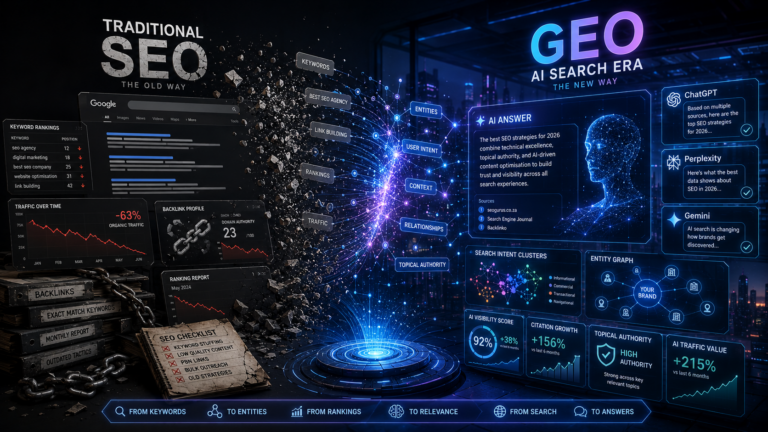
SEO in the Era of Answer Engines: How to Stay Visible
Search is evolving — and fast.
With tools like Google’s Search Generative Experience (SGE), Bing Copilot, ChatGPT Search, and Perplexity, the way users find information has fundamentally changed. Instead of displaying lists of links, these systems — known as Answer Engines — now summarise information directly from trusted sources.
For marketers and business owners, this shift raises an urgent question:
How do you stay visible when AI delivers the answer before users even click?
The answer lies in adapting traditional SEO foundations for a new age of Answer Engine Optimisation (AEO) — where clarity, authority, and structure determine whether your brand becomes a cited source in the AI era.
1. The Search Revolution Has Already Begun
Answer Engines represent the next stage in search evolution.
Unlike traditional search engines that provide a ranked list of web pages, AI-driven systems synthesise data from multiple trusted sites to deliver conversational, context-rich responses.
- Google SGE (AI Overviews) generates summarised explanations with source links.
- Bing Copilot integrates ChatGPT responses within search results.
- ChatGPT Search and Perplexity use language models to pull data from top-ranked and authoritative websites.
This means visibility no longer depends on being clicked — it depends on being cited.
If your site isn’t structured, authoritative, and clearly written, AI systems may read your content — but choose not to mention it.
2. What Are Answer Engines (and Why They Matter)
Answer Engines are AI models trained to deliver direct answers using the best available online sources. They interpret questions, identify the most trustworthy data, and merge it into a single response.
They don’t replace search engines — they extend them. Google still crawls, indexes, and ranks content. The difference is that AI filters what it considers “helpful” and presents it in a conversational format.
As SEO strategist Lily Ray notes, “SEO isn’t disappearing — it’s evolving into a credibility game.”
In other words, the goal isn’t just to appear on Page 1 — it’s to become a source AI engines trust enough to quote.
3. How Answer Engines Choose What to Cite
AI-driven systems evaluate web content through a mix of traditional and new ranking signals. These include:
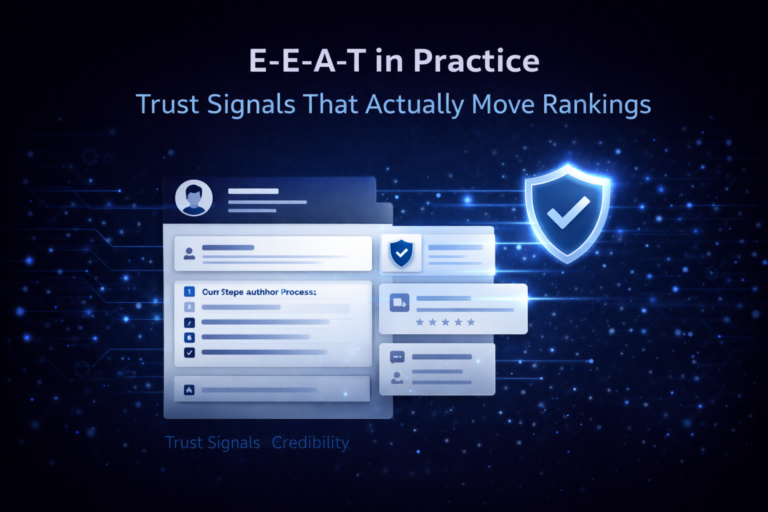
- E-E-A-T (Experience, Expertise, Authoritativeness, Trustworthiness): Human-led content still wins. Real author names, credentials, and transparency count more than ever.
- Entity clarity: AI connects verified entities — brands, experts, locations — to known topics. Schema and internal linking help establish this.
- Structured data and schema markup: Content that uses FAQ, Article, and HowTo schema is easier for AI systems to understand.
- Clear, concise answers: Pages with direct, well-written explanations are more likely to be summarised.
- Topical depth: Sites that demonstrate expertise through interlinked, cohesive content clusters outperform those with scattered coverage.
In short: AI engines don’t just find answers — they curate them from the most credible digital voices.
4. The SEO Shift: From Search Results to Answer Inclusion
Traditional SEO success meant ranking first.
But in the era of Answer Engines, visibility means being selected as the source behind the answer.
If your website provides consistent, factual, and experience-backed insights, you’re more likely to appear as a cited source — either as a visible link in Google’s AI Overview or as a referenced insight in conversational AI systems like ChatGPT Search.
This requires precision:
- Clean on-page optimisation.
- Clear semantic structure.
- Author signals that prove you know your subject.
Build that foundation with our On-Page SEO services. Our strategies ensure your content is structured, machine-readable, and aligned with AI-driven discovery models.
5. How to Build Visibility in the Age of Answer Engines
Here’s how businesses can adapt their SEO for the AI era — without abandoning the fundamentals that still work.
1. Prioritise On-Page Clarity and Structure
Ensure every page provides a clear answer to a specific question. Use subheadings, bullet points, and schema markup to make your content easy for AI systems to interpret.
2. Optimise for E-E-A-T
Highlight author expertise, credentials, and real-world experience. Google and AI both reward content grounded in authentic authority.
3. Use Structured Data
Implement schema for articles, FAQs, products, and reviews. Structured data helps AI engines understand your site’s content relationships at a granular level.
4. Target Conversational Queries
Optimise for natural-language questions — the same way people ask AI tools for help.
Example: instead of “SEO services South Africa,” target “How can local businesses improve their SEO in South Africa?”
5. Strengthen Topic Authority
Create clusters of related articles that reinforce one another. The deeper your coverage of a topic, the more AI sees your brand as an expert.
6. Monitor AI Visibility
Track where your content appears in AI Overviews or Bing citations using emerging AEO analytics tools. Visibility is shifting — measure accordingly.
6. Case Study: How Structured Expertise Earned AI Visibility
A Cape Town-based finance blog saw declining traffic after the March 2024 update. Instead of chasing keywords, the site focused on:
- Adding structured FAQ schema to top-performing posts.
- Including qualified author bios with LinkedIn links.
- Rewriting content for clarity and accuracy.
Within months, the blog appeared in Google’s AI Overviews and Bing Copilot citations for high-value queries like “retirement planning in South Africa.”
Its click-through rate stabilised — but brand visibility and authority soared.
Lesson: In the AI era, being the cited answer is the new ranking win.
7. Why E-E-A-T and “Information Gain” Still Matter
The best way to stay visible in an AI-driven world is the same principle that has guided Google’s quality systems for years: create something new, helpful, and human.
- E-E-A-T proves you’re a trustworthy source.
- Information Gain ensures your content adds genuine value to what’s already online.
- Experience differentiates human expertise from generic AI text.
These aren’t abstract concepts — they’re measurable signals that determine whether AI systems reference or ignore your work.
8. The Future: Visibility Through Trust
AI isn’t replacing SEO — it’s redefining what it rewards.
Businesses that focus on clarity, structure, and experience will remain visible, not just in traditional search, but across every emerging discovery platform.
You don’t need to chase algorithms — you need to speak clearly, prove your expertise, and structure your knowledge so that both humans and machines can understand it.
Future-proof your visibility.
Partner with SEO Gurus for On-Page SEO services that bridge traditional optimisation and AI-era discovery — helping your brand stay seen, cited, and trusted in the world of Answer Engines.