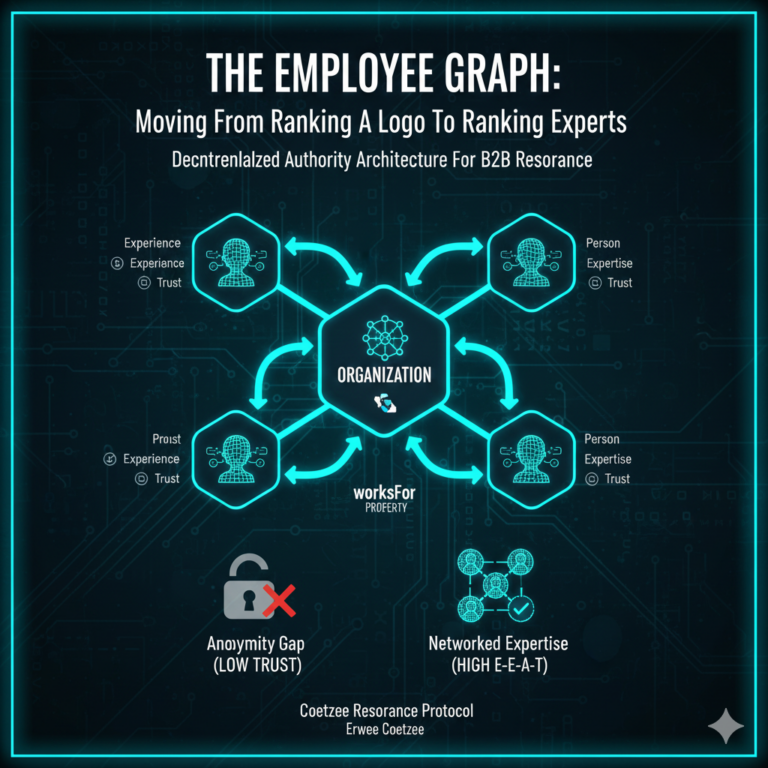
The Complete E-E-A-T SEO Framework: Building Authority in Modern Search
The Complete E-E-A-T SEO Framework: Building Authority in Modern Search
Search engine optimization has evolved significantly over the past two decades. Early strategies focused almost entirely on keywords and backlinks. While those elements remain important, modern search systems increasingly evaluate something deeper: credibility.
This shift has led to the widespread discussion of the E-E-A-T framework, which stands for Experience, Expertise, Authoritativeness, and Trustworthiness.
E-E-A-T is not a single ranking factor. Instead, it represents a collection of signals that help search engines determine whether information comes from reliable sources.
Websites that consistently demonstrate expertise, transparency, and recognition within their industry are more likely to earn long-term search visibility.
This guide explains how the E-E-A-T framework works and how organizations can implement it as a structured SEO strategy.
Understanding the E-E-A-T Framework
The E-E-A-T model provides a way to evaluate the credibility of information and the reliability of content creators.
Each component contributes a different dimension of credibility.
- Experience – Demonstrating first-hand knowledge of a topic.
- Expertise – Showing professional understanding and technical competence.
- Authoritativeness – Earning recognition from other trusted sources.
- Trustworthiness – Ensuring transparency, reliability, and credibility.
When these signals align, search engines gain greater confidence in the reliability of the information being presented.
Why E-E-A-T Matters in Modern Search
Search is increasingly driven by systems that synthesize answers rather than simply listing links.
These systems must determine which sources are credible before incorporating them into generated responses.
As a result, search visibility increasingly depends on demonstrating authority across a topic rather than publishing isolated articles.
Organizations that build consistent authority signals across their websites are more likely to become trusted information sources.
The Four Pillars of E-E-A-T
Experience
Experience demonstrates first-hand knowledge. Content that includes practical insights, experiments, or case analyses often provides stronger credibility signals than purely theoretical explanations.
Examples include:
- SEO experiments
- real-world case studies
- implementation walkthroughs
- industry observations
Expertise
Expertise reflects structured knowledge and professional understanding of a subject.
This can be demonstrated through:
- technical guides
- framework explanations
- training materials
- methodology documentation
Authoritativeness
Authoritativeness emerges when other organizations recognize your expertise.
- digital PR coverage
- conference speaking
- industry citations
- collaborations
Trustworthiness
Trustworthiness ensures that information is presented transparently and responsibly.
- clear author attribution
- transparent policies
- contact information
- technical reliability
These signals reassure both users and search engines that the information is credible.
Authority Clusters and Content Ecosystems
Modern SEO increasingly relies on authority clusters rather than individual pages.
An authority cluster is a network of interconnected resources that collectively demonstrate expertise around a topic.
- framework explanations
- research articles
- case studies
- thought leadership
- methodology guides
When these pages link to one another, they create a cohesive ecosystem that reinforces topical authority.
E-E-A-T and AI Search
AI search systems increasingly synthesize answers from trusted sources.
Instead of simply ranking links, these systems attempt to determine which sources provide reliable explanations.
Content that demonstrates strong E-E-A-T signals is more likely to be referenced when AI systems generate answers.
This makes credibility signals increasingly important for long-term search visibility.
Implementing an E-E-A-T Strategy
Organizations can implement E-E-A-T by following a structured approach.
- identify core topics
- publish evidence-based content
- build authority clusters
- earn recognition through digital PR
- strengthen transparency and trust signals
Over time, these actions help build recognition as a reliable knowledge source.
Measuring E-E-A-T Growth
E-E-A-T improvements often appear gradually through signals such as:
- brand mentions
- external citations
- growth in branded search queries
- increased recognition within industry discussions
These indicators show that a website is gaining credibility within its topic ecosystem.
Conclusion
E-E-A-T represents the evolution of search from keyword matching toward credibility evaluation.
Organizations that consistently demonstrate experience, expertise, recognition, and transparency are more likely to earn sustainable visibility.
In an increasingly competitive search ecosystem, authority is built not through isolated tactics but through structured knowledge systems.
The E-E-A-T framework provides the foundation for building those systems.
About the Author
Erwee Coetzee is an SEO strategist specializing in technical SEO, authority signals, and E-E-A-T optimization. His work focuses on helping organizations build sustainable search visibility through structured content ecosystems and credibility frameworks.