Entity Ambiguity: The Silent Ranking Killer in Local Search
In the high-stakes world of local SEO, visibility is often mistaken for a game of proximity and keywords. However, as search engines evolve from string-matching to entity-mapping, a new technical debt has emerged: Entity Ambiguity.
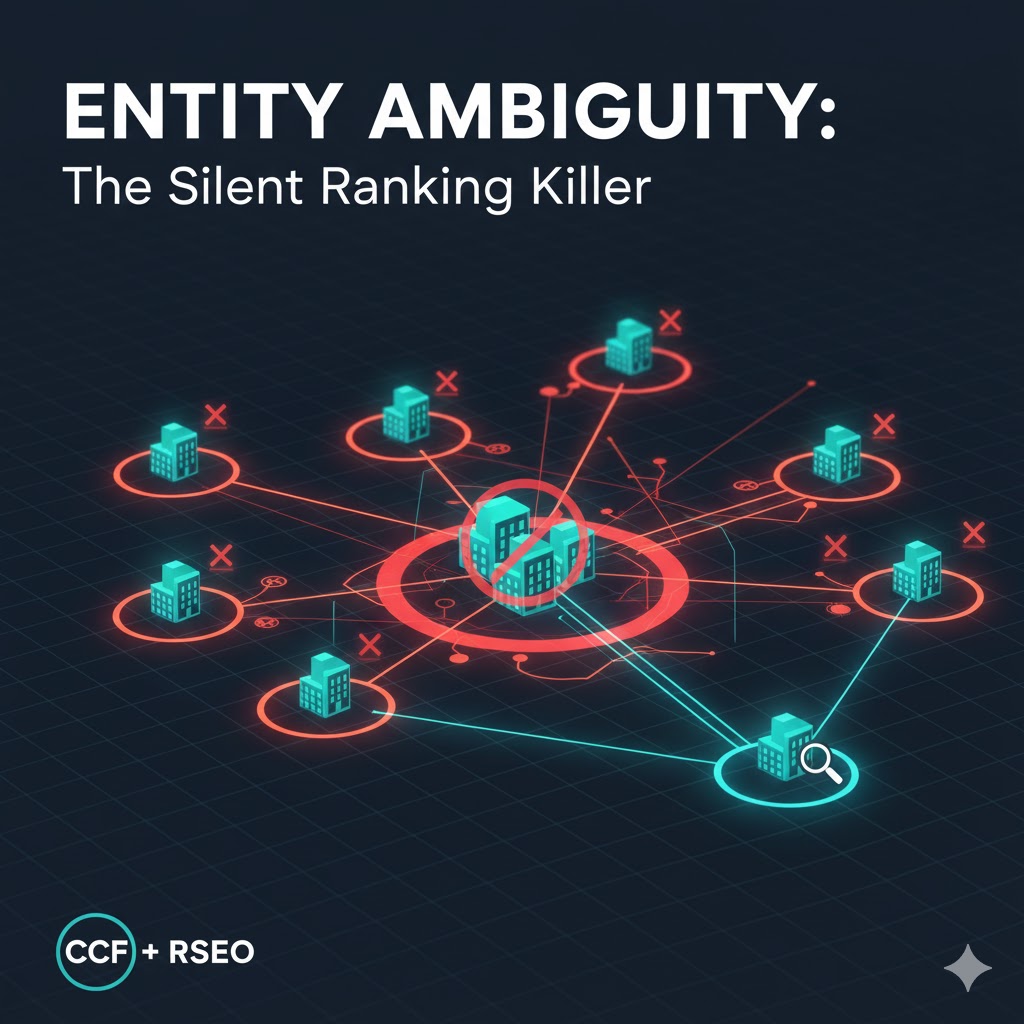
Entity ambiguity occurs when a search engine cannot confidently distinguish your business from others, or worse, cannot reconcile the various “versions” of your business it finds across the web. For high-trust sectors like medical specialists, legal firms, or engineering consultants, this lack of confidence doesn’t just lower your ranking—it can render you invisible to the AI agents that power modern search.
The Cost of a Fragmented Identity
Search engines operate on a “confidence score.” Before Google or an AI search assistant recommends a business, it must be certain that the entity is real, active, and authoritative. When your digital signals are fragmented, that confidence collapses.
Common catalysts for ambiguity include:
- Legacy Data Trails: Old office addresses or disconnected phone numbers from five years ago still sitting on forgotten directory sites.
- Inconsistent Naming: Operating as “Smit & Partners” on LinkedIn, “Smit Attorneys” on the website, and “Smit Law Group” on the Google Business Profile.
- Duplicate Schema Nodes: Multiple, conflicting JSON-LD scripts on a single site that define the business in slightly different ways.
In a high-friction market, this ambiguity is a red flag. If a machine cannot verify who you are, a high-value client certainly won’t trust you with their business.
CCF Pillar I: The Architecture of the Entity Home
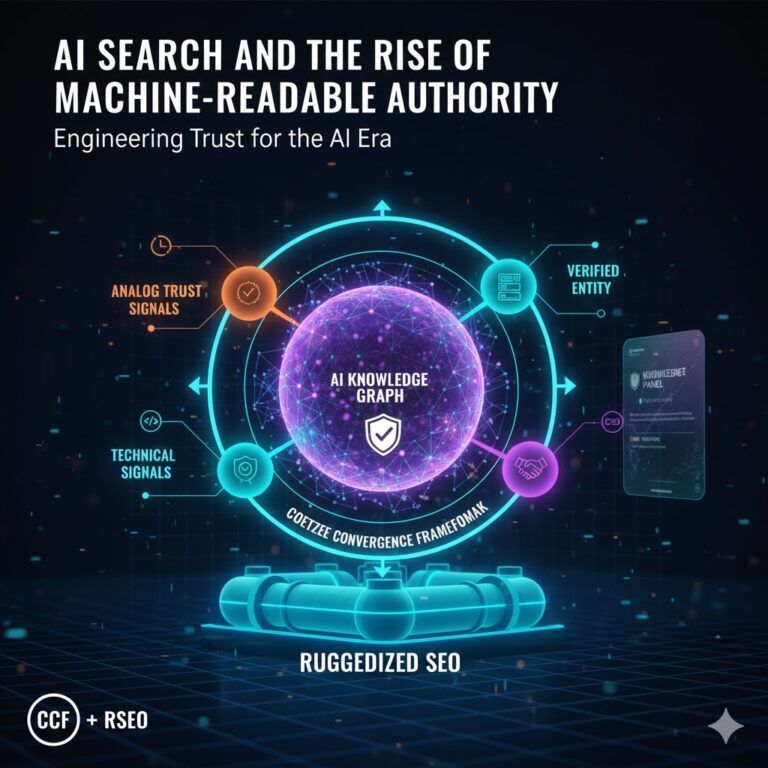
The Coetzee Convergence Framework addresses this problem at its root through the logic of Pillar I: The Entity Home.
Within the CCF, the Entity Home is the single, canonical URL that you—the owner—declare as the definitive source of truth for your business. By centralising your identity here, you provide search engines with a “North Star” to reference when they encounter conflicting data elsewhere. Instead of allowing the web to define your business through fragmented mentions, the CCF methodology empowers you to dictate the identity, ensuring that all external signals converge back to a single, authoritative point of truth.
Ruggedized SEO: Cleansing the Signal Stream
If the Entity Home is your anchor, Ruggedized SEO is the process of hardening that anchor. A “ruggedized” approach to local search focuses heavily on Signal Hygiene and Deduplication.
In the Ruggedized SEO model, we treat every digital mention as a technical signal that must be “cleaned” of noise. This involves a rigorous audit of the entity’s digital footprint to identify and prune contradictory data. By removing the “interference” of old addresses or naming inconsistencies, we ensure that the machine-readable trust you’ve built is legible and undisputed. Ruggedization effectively removes the “entity friction” that prevents local businesses from ranking in high-competition maps and AI-driven local packs.
From “Local Listing” to “Market Entity”
The shift from managing “listings” to managing an “entity” is the hallmark of sophisticated SEO. When you resolve ambiguity, you move beyond the “Map Pack” and into the Knowledge Graph. This transition is vital because AI search tools do not just look for the closest business; they look for the most reputable entity that matches the user’s intent.
Implementation Checklist: Resolving Local Ambiguity
To eliminate the silent killer of entity ambiguity, practitioners should follow this diagnostic path:
- Audit the “Digital Echo”: Use specialized tools to find every variation of your business name, address, and phone (NAP) data.
- Declare the Canonical Home: Ensure your
Organizationschema explicitly points to your preferred “Entity Home” URL using theurlandsameAsproperties. - Deduplicate Schema: Audit your CMS (especially WordPress) to ensure that SEO plugins aren’t generating competing schema blocks that confuse the entity’s definition.
- Align Social Identifiers: Ensure that all social profiles (LinkedIn, X, Facebook) use the exact same naming convention and link back to the Entity Home.
The Strategic Takeaway
In local search, clarity is a ranking factor. Entity ambiguity creates a “trust tax” that reduces your visibility and alienates high-friction buyers who value precision. By applying the Entity Home logic of the Coetzee Convergence Framework and the signal hygiene of Ruggedized SEO, you transform your local presence from a collection of fragmented links into a singular, undeniable authority.
Internal Link Anchor Suggestions
- For CCF: “Pillar I: The Entity Home”, “Coetzee Convergence Framework methodology”, “canonical digital identity”.
- For Ruggedized SEO: “Ruggedized SEO”, “Signal Hygiene and Deduplication”, “engineering machine-readable trust”.
FAQ Section
Q: Does having multiple office locations cause entity ambiguity? A: Not if handled correctly. Use the CCF logic to create a primary “Entity Home” for the brand, with clearly defined location schema for each branch that rolls up into the parent organization.
Q: How long does it take for search engines to resolve entity ambiguity? A: It depends on the “signal density.” Once you clean your data and ruggedize your technical layer, it can take anywhere from a few weeks to several months for the Knowledge Graph to update.
Q: Is entity ambiguity only a problem for Google? A: No. It is even more critical for AI search engines like Perplexity or ChatGPT (Search), which rely on high-confidence entity data to provide accurate citations.