The “Technical Sovereignty” Imperative: Why SA Brands Must Own Their Infrastructure
There is a dangerous ceiling in the South African digital economy, and it is built entirely of rented code. Every day, I audit businesses that have scaled to impressive revenue benchmarks, only to suddenly plateau. Their lead pipeline stagnates, their search visibility drops, and they find themselves entirely outmaneuvered by competitors.When we look under the hood, the root cause is almost always the same: they do not own their digital infrastructure. They have built a high-revenue business on closed-ecosystem, rented SaaS platforms.It is easy to understand the initial appeal. Platforms like Shopify or Wix offer the illusion of simplicity. But as an architect of digital systems, I have a forensic obligation to warn you: when you rent your platform, you are capping your potential. You are at the absolute mercy of a third-party development roadmap, their restrictive server limitations, and their arbitrary code updates.If you are serious about dominating your sector in 2026, you cannot operate as a digital tenant. You must establish Technical Sovereignty.
The “Rented Land” Trap
When you operate on a closed SaaS platform, you do not own your environment; you merely lease digital space.
This creates a severe operational bottleneck. If you need a specific server-side configuration to decrease latency for your South African users, you cannot execute it. If you need to deploy a highly complex, custom database structure to map your specific inventory, you are blocked by the platform’s rigid architecture.
When an algorithmic shift occurs and you need to pivot your technical strategy overnight, you are forced to wait for the platform to release an update—if they ever do. You are delegating your most critical revenue-generating asset to a system you cannot control.
Defining Technical Sovereignty
To break through the plateau, we must completely redefine how we view the tech stack. Technical Sovereignty—owning your stack, your data, and your environment—is a prerequisite for advanced market dominance. It is not an IT preference; it is a non-negotiable business asset.
This means moving away from restrictive SaaS models and transitioning to a self-hosted, sovereign stack. In the e-commerce and high-ticket service space, this specifically means leveraging open-source environments like custom-engineered WordPress and WooCommerce architectures.
In a sovereign environment, you dictate the rules. You control the server resources, you own the raw database, and you possess unhindered root access to the code. You are no longer leasing; you are engineering.
The SEO Reality: Why You Must Control the Code
Why do so many large South African digital agencies push their clients onto these restrictive platforms? Because it is infinitely easier for their junior account managers to handle. They sell “cookie-cutter” packages and do not want the liability or complexity of actual server management.
But real Technical SEO is not about changing meta titles in a user-friendly dashboard. It is hardcore systems engineering.
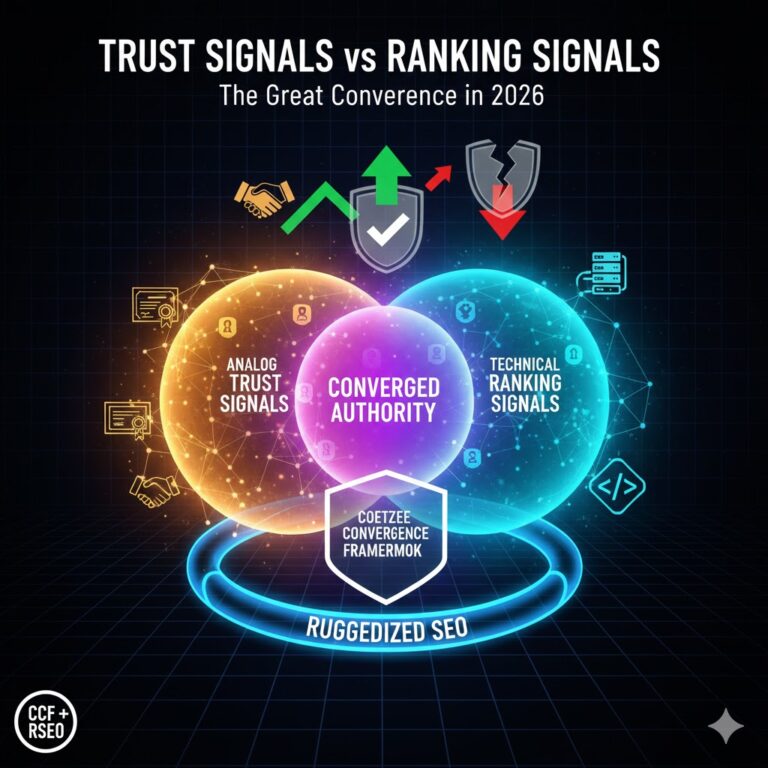
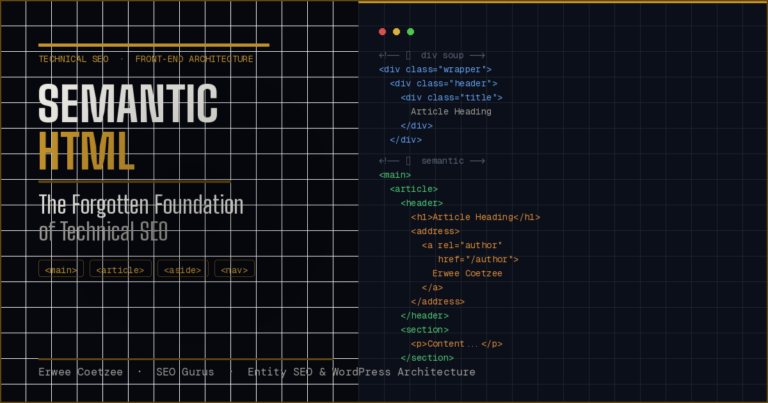
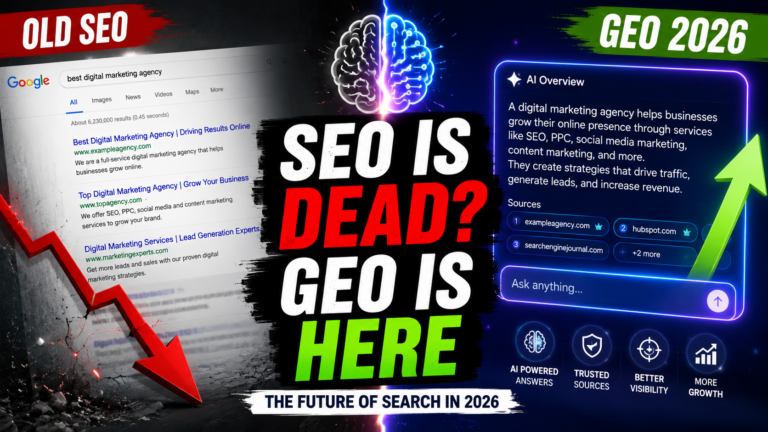
To engineer an algorithmic advantage and dominate generative search engines, my team and I must map complex business entities and inject deep E-E-A-T (Experience, Expertise, Authoritativeness, and Trustworthiness) signals directly into the framework of the site. This requires absolute, unhindered root access to the server, the database, and the Document Object Model (DOM).
If your platform blocks my access to manipulate the raw architecture or restricts the injection of advanced JSON-LD structures, we cannot build a competitive advantage. If you cannot manipulate the code, you cannot manipulate the outcome.
The Architect’s Approach: From Narrative to Mathematical Model
This transition requires a fundamental shift in perspective. We must stop viewing your website as “web design” and start treating it as systems engineering.
The internet has moved far beyond reading human “stories” or basic marketing copy. Generative AI and search algorithms now parse verified entities. To rank aggressively, your business must transition from a subjective “Narrative” to a strict, machine-readable “Mathematical Model.”
At SEO Gurus and EC Business Solutions, this is the core of our methodology. Executing this as a falsifiable operational protocol means that every single data point, schema markup, and transactional flow must be owned, manipulated, and mathematically proven by the business. You simply cannot execute this level of entity mapping within a closed ecosystem where the database is abstracted away from you.
The Migration Roadmap: Engineering the Shift
Migrating a high-revenue brand from rented land to a sovereign stack is not a weekend project. It is a highly complex engineering task. It requires preserving years of search equity, meticulously restructuring the database, and building a secure, high-performance server environment tailored exactly to your unit economics.
This is why the process requires a specialist architect, not a generalist web designer relying on drag-and-drop page builders.
If your business is currently hitting a revenue ceiling due to the technical constraints of your platform, it is time to take back control of your infrastructure. Stop renting your digital real estate and letting third-party limitations jeopardise your growth. Reach out to me at SEO Gurus today, and let’s book a technical infrastructure audit to begin your migration to a sovereign stack.