The Economic Cost of Being “AI-Invisible”
In the modern boardroom, there is a dangerous complacency surrounding digital presence. Executives often operate under the “Search Illusion”: because they can find their website when they type their own brand name into a search engine, they assume their digital presence is healthy.
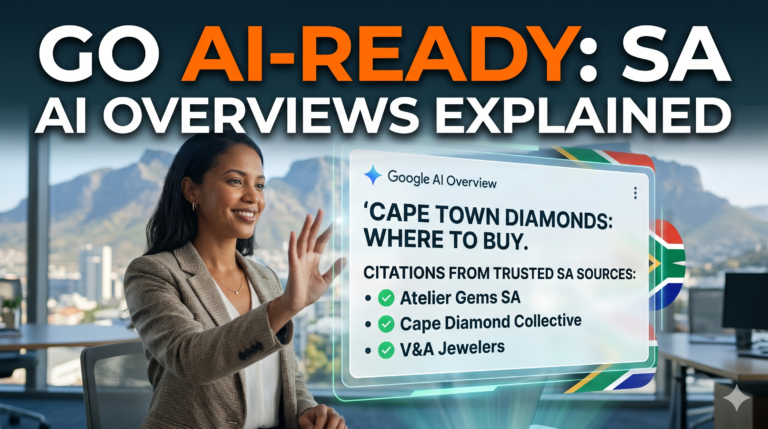
This is a profound miscalculation. The landscape of high-intent B2B research has shifted. Potential clients are no longer scrolling through pages of blue links; they are asking AI models to synthesize recommendations. If your brand is not surfacing in those AI-generated responses, you are not just missing out on traffic—you are suffering from AI-Invisibility.
The “Invisible Competitor”
The most significant threat to your market share is no longer the competitor you see bidding against you on Google Ads. It is the “invisible competitor”: the firm that is consistently recommended by AI agents as the default authority in your industry.
While you are fighting for awareness through traditional, high-cost acquisition channels, your invisible competitor is being built into the decision-making process of your target market before they even contact you. They are capturing the lead, framing the narrative, and setting the criteria for the solution—all while you remain absent from the conversation.
Funnel Erosion: The Hidden Leak
AI-Invisibility is not a technical problem; it is a leak in your sales funnel that your marketing team likely cannot see. When your brand is absent from the AI’s synthesis, your funnel experiences silent, compounding erosion:
- The Consideration Gap: By the time a potential client reaches out for a proposal, they have already been “pre-sold” on the firm the AI recommended. You are left playing catch-up, forced to overcome an inherent bias toward the AI’s suggested authority.
- CAC Inflation: To compensate for your lack of organic AI-authority, you are forced to increase your spend on paid media to maintain lead volume. This artificially inflates your Customer Acquisition Cost (CAC), directly suppressing your profit margins.
- Brand Value Degradation: When an AI consistently ignores your brand, the market’s collective perception of your firm’s relevance naturally declines, leading to long-term erosion of your brand’s equity.
The Auditor’s Perspective
CFOs routinely audit balance sheets, operational costs, and inventory. Yet, the brand’s most critical asset—its digital authority—is often left unmeasured and unmanaged.
AI-Invisibility should be viewed as an Opportunity Cost. If your firm is not the AI’s “default” recommendation, you are essentially subsidizing your competitors’ growth by leaving the most valuable, high-intent traffic to them. A rigorous audit of your “AI-readiness” reveals exactly where your brand is leaking value. It identifies the gaps in your data architecture that prevent AI models from recognizing your firm as the definitive expert in your niche.
Protecting Your Digital Assets
The economic reality is simple: either you architect your brand to be the AI’s source of truth, or you accept the financial consequences of becoming invisible.
The transition from “ranking for keywords” to “owning the knowledge graph” is no longer an optional marketing activity. It is an asset-protection strategy. By securing your firm’s place in the AI-synthesized future, you insulate your business from the volatility of changing search algorithms and ensure that you remain the default authority when your next high-value client comes asking for a solution.
If your firm is not appearing in the AI’s consideration set, you are paying a high price for your absence. It is time to treat your digital infrastructure with the same financial rigor as any other capital investment. Don’t wait for the invisible competitor to take your market share—take control of your digital narrative today.