The 99-Score Reality: Why Kadence Blocks is the Definitive Stack for High-Trust WooCommerce Architectures
In the enterprise e-commerce space, a bloated website is not merely a technical nuisance—it is an institutional liability.
Too many high-revenue brands are running on infrastructure fundamentally compromised by legacy page builders. They prioritize “drag-and-drop” agility at the expense of structural integrity, creating bloated, sluggish environments that fail both the human user and the algorithmic agent. If your WooCommerce store isn’t hitting a 99+ performance score, you aren’t just losing conversion points; you are failing the trust protocol required for high-ticket transactions in 2026.
The Liability of DOM Bloat
The primary offenders in the e-commerce space are legacy page builders that prioritize convenience over clean execution. These platforms frequently generate massive DOM trees, deeply nested <div> structures, and thousands of lines of unnecessary, render-blocking JavaScript.
Every extra layer of DOM complexity you add to a product page directly throttles the browser’s main thread. When your “Time to Interactive” (TTI) is dragged down by bloated scripts loading in the background, you are forcing the user’s hardware to perform unnecessary computational work just to render a basic purchase button. In the luxury and high-trust B2B sectors, this technical debt manifests as “perceived insecurity.” If a brand’s digital infrastructure is slow and unresponsive, the high-net-worth consumer subconsciously associates that latency with a lack of backend security and professional rigor.
Core Web Vitals as a Trust Protocol
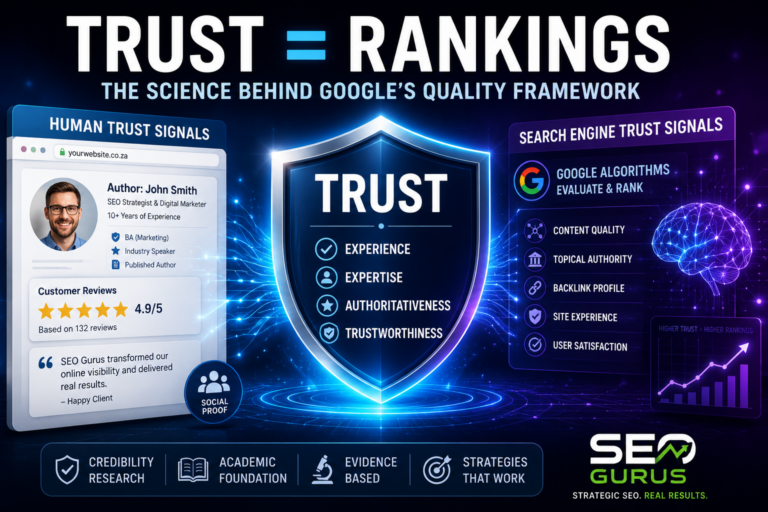
In the current digital landscape, Core Web Vitals have transcended SEO utility to become a fundamental trust protocol. We are no longer talking about a “ranking boost”; we are talking about the basic mechanics of psychological conversion.
A high-net-worth buyer in Cape Town or abroad expects an interface that behaves with the same precision as a physical luxury storefront. Millisecond delays in loading dynamic inventory, shipping calculators, or checkout modules are interpreted as digital friction. When your infrastructure is optimized for a 99-score reality, you are sending a persistent, non-verbal signal of operational excellence. Speed is not just a UX metric—it is a core component of your brand equity.
The AI Parsing Advantage: GEO Efficiency
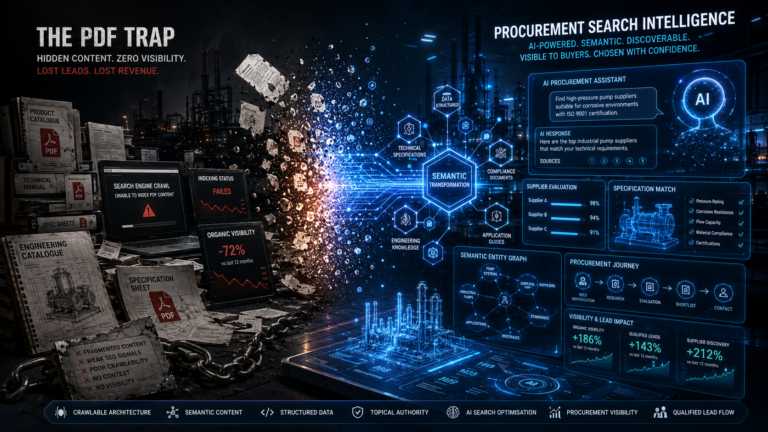
Your site architecture is also a primary interface for non-human agents. Generative engines (like Perplexity and Gemini) prioritize the extraction of structured, semantic data. When these engines crawl your site, they are not looking for visual flair; they are looking for the most efficient path to parse your product entities, price points, and shipping schemas.
Legacy builders create “noise”—thousands of lines of non-semantic code that AI crawlers must filter through to find the actual data points that matter. Kadence Blocks, by contrast, relies on lean, modular, and natively built Gutenberg HTML. This architecture allows AI synthesis engines to ingest your site’s data with zero friction. By providing clean, semantically defined HTML, you reduce the “computational cost” of parsing your site, making it significantly more likely that your products will be surfaced in high-intent AI Overviews.
The Kadence/WooCommerce Synergy
The reason Kadence Blocks has become the definitive stack for enterprise WooCommerce is its modular architectural discipline. Unlike bloated legacy systems that load the entire platform’s script library on every page load, Kadence is engineered to load CSS and JavaScript only when specific blocks are actually rendered.
- Zero Passive Payload: If a specific product page doesn’t use a specific feature, the code isn’t loaded. Period.
- Semantic DOM: The output is clean, lean, and compliant with modern web standards, ensuring that browsers and bots don’t waste energy interpreting redundant container elements.
- Architectural Scalability: It allows for custom, high-performance Gutenberg builds that maintain consistent performance profiles even as the product catalog scales into the thousands.
The Engineering Mandate
If you are a CTO or E-commerce Director still relying on a legacy page builder to support a high-revenue WooCommerce operation, you are operating on a broken stack. You are prioritizing the comfort of your marketing team over the structural integrity of your digital asset.
The 99-score reality is not optional. It is the minimum baseline for modern enterprise. Strip the bloat, move to a native, modular Gutenberg stack, and treat your site’s performance with the same forensic rigor you apply to your financial reporting. Your code is the first thing a client—human or AI—interacts with. Make sure it reflects the standard of the products you sell.