The Resonance Hypothesis: Why Technical Competence is a B2B Commodity
In the legacy era of B2B marketing, the objective was simple: prove you could do the job. If you ranked for “Managed IT Services” and your website listed a comprehensive suite of technical capabilities, you were in the game. However, under the Coetzee Resonance Protocol (CRP), we identify a fundamental shift in high-stakes procurement. In complex B2B markets, technical competence has become a commodity—a baseline “threshold requirement” that gets you onto the RFP list, but never wins you the contract.
To win in an AI-mediated search environment, an organisation must move beyond capability and solve for resonance.
Problem Definition: The Threshold Requirement Trap
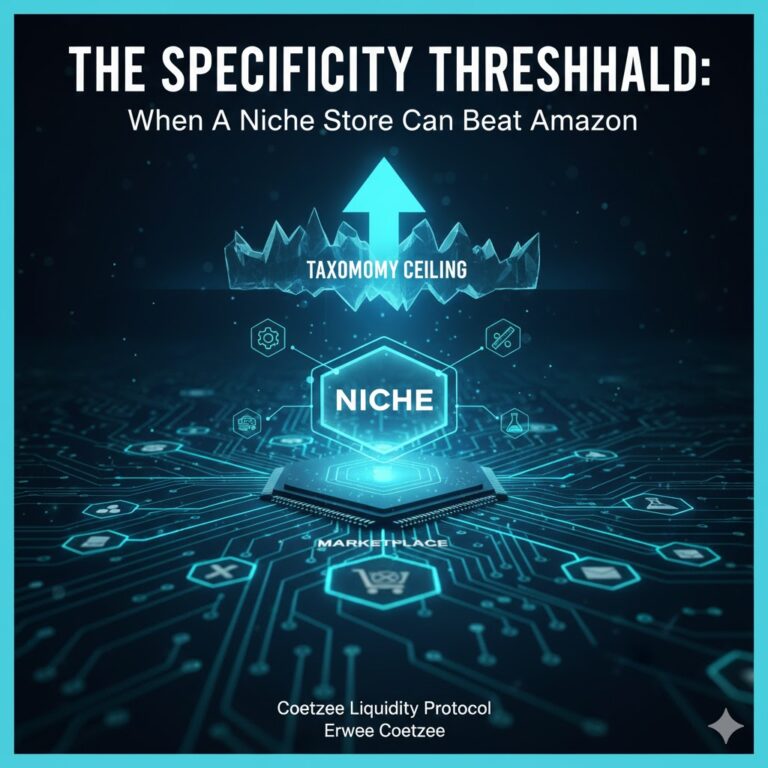
In shallow B2B markets—break-fix support or basic SaaS—buyers evaluate on auditable attributes: price, SLA, and features. Here, the Coetzee Liquidity Protocol applies perfectly.
However, in Deep B2B markets (strategic consultancy, enterprise technology partnerships, or long-term outsourced CIO engagements), the buyer faces a different risk. They aren’t worried about whether you have the right servers; they assume you do. They are worried about whether your humans will behave predictably and share their institutional values over a 36-month delivery cycle.
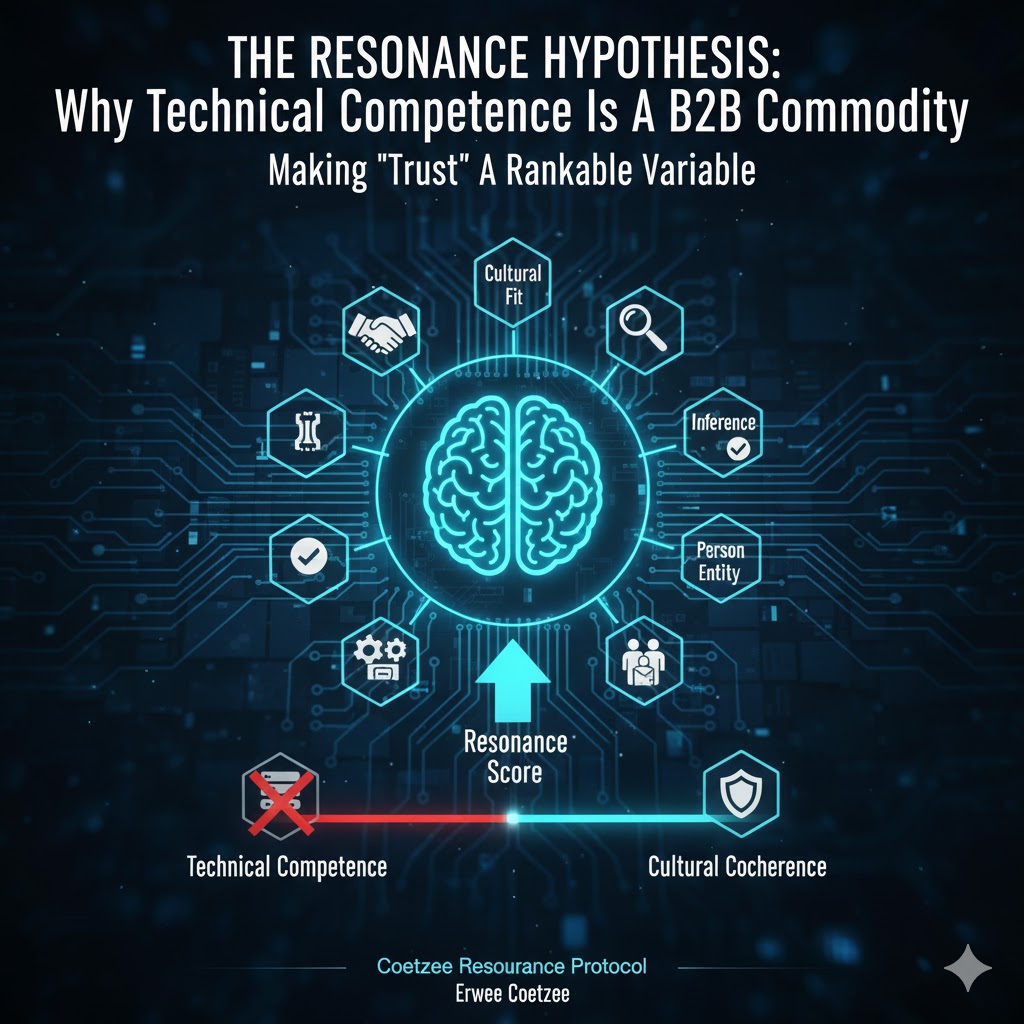
The “Threshold Requirement Trap” occurs when a boutique firm continues to market its technical specs, failing to realise that the buyer is actually auditing their Cultural Coherence. If your digital footprint only speaks to what you do, you remain a replaceable vendor. If it speaks to who you are, you become a resonant partner.
Mechanism Explanation: Inference as an Engineering Problem
Trust is often viewed as a “soft” marketing concept. In the CRP framework, trust is treated as a signal architecture problem.
Because a buyer cannot truly audit your internal culture before signing a contract, they rely on Inference. They look for patterns of consistency across your entire digital surface area—from your CEO’s LinkedIn posts to the sentiment of your junior engineers on Glassdoor.
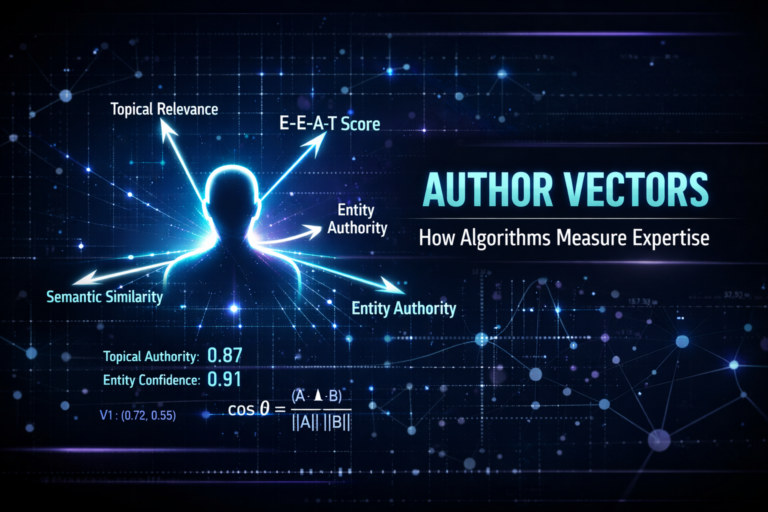
The search engine performs a structurally identical task. Google’s E-E-A-T (Experience, Expertise, Authoritativeness, and Trustworthiness) guidelines are essentially an algorithm designed to resolve a single question: Is this entity what it claims to be? When your internal organisational culture is translated into machine-readable signals, you move from “Probabilistic” authority (we think they are good) to “Deterministic” resonance (the signals confirm they are the authority).
Operational Implementation: Making “Trust” Rankable
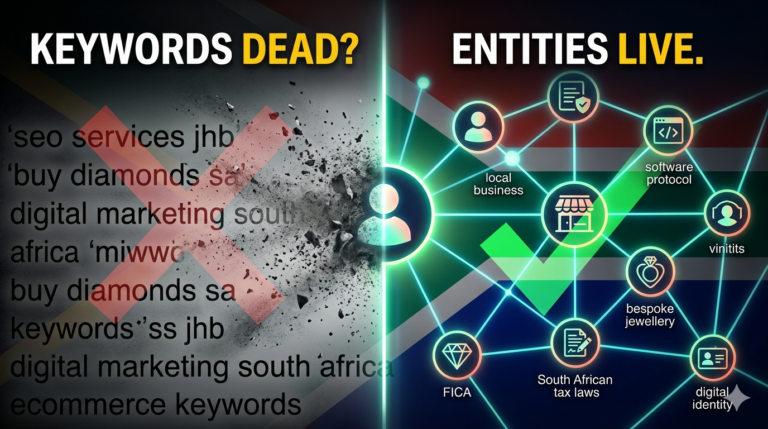
To implement the Resonance Hypothesis, the firm must stop optimizing for keywords and start optimizing for Cultural Legibility.
1. The Shift to Entity-Based Authority
Stop ranking the logo. In complex B2B, the buyer audits the humans. This requires a decentralized authority architecture where every key employee is built into a publicly indexed Person node. When an AI agent sees a network of credentialed experts all projecting a coherent cultural signal, the resonance score of the parent Organization rises.
2. Identifying the Resonance Gap
A Resonance Audit identifies where your declared values (what you say on your “About” page) contradict your observable signals (what your employees actually say online). Closing this gap is the first step toward ruggedized SEO for B2B.
3. Engineering Signal Coherence
Consistency beats volume. High Signal Coherence (Sc) occurs when the vocabulary, values, and professional standards expressed across all employee nodes reinforce one another. This generates a “resonance” that is legible to both the procurement officer and the search algorithm.
Real-World Example: The Boutique Transition
Consider a mid-sized South African engineering consultancy. For years, they competed on generic “civil engineering” keywords. They were treated as a commodity, forced to fight on price.
By applying the CRP, they shifted their focus. They de-indexed their low-value “SME support” content and replaced it with deep-dive technical leadership authored by their lead partners. They encoded their internal mentorship programme into their schema.
The result? They didn’t just get “more traffic.” They achieved Resonance. When an enterprise mining group searched for “sustainable infrastructure governance,” they found a coherent network of experts rather than a faceless vendor. The technical competence was assumed; the cultural resonance won the R20-million contract.
Strategic Implications: Passing the Human Audit
In the AI-first commerce era, your website is no longer just a brochure; it is a verification node.
- Technical Competence is the Entry Fee: You must have it, but you cannot win with it alone.
- Cultural Fit is the Proxy for Risk: Buyers use your digital culture to predict your future performance.
- The CRP is the Bridge: It is the engineering protocol for making your internal culture structurally unavoidable in the search index.
FAQ
Is culture really an SEO factor? In B2B, yes. Google’s ability to link “Person” entities to “Organization” entities means that the collective sentiment and authority of your workforce directly influence your brand’s E-E-A-T.
Does this mean I need more content? No, it means you need more coherent content. A single authoritative paper authored by a verified expert node is worth more than fifty generic blog posts written by a ghostwriter.
How does this relate to the Liquidity Protocol? The CLP handles the “What” (inventory/products), while the CRP handles the “Who” (people/culture). For a technical e-commerce store, you need both. For a B2B service firm, the CRP is your primary driver.