Building a Machine-Readable Store: The Technical Architecture Behind CLP
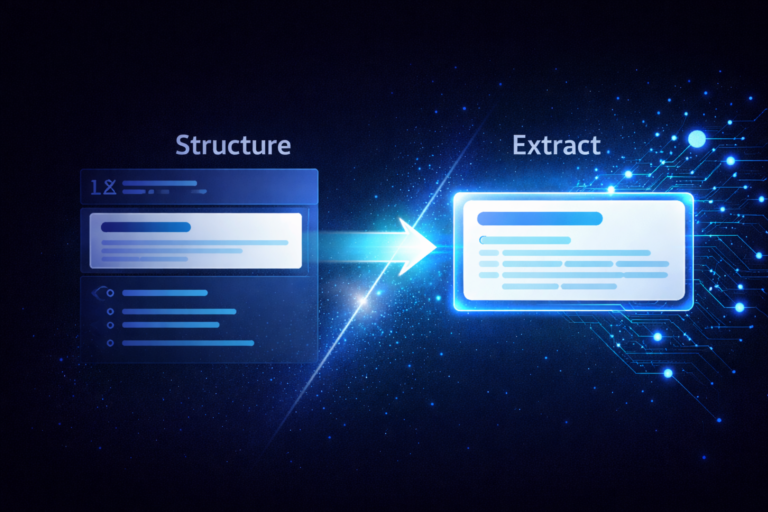
The Coetzee Liquidity Protocol is not a marketing theory; it is a systems architecture. To compete in an environment where AI agents (LLMs, Shopping Graphs, and Search Generative Experiences) are the primary consumers of your data, the “human-facing” website must be viewed as a secondary output. The primary output is a high-resolution, machine-readable data node.
Building a CLP-compliant store requires a move away from monolithic, “black box” e-commerce platforms toward a decoupled, attribute-first engineering mindset. This is the final frontier of ruggedized SEO.
Problem Definition: The “Human-Only” Store
Traditional e-commerce builds for eyes. Product data is often trapped in unstructured text blocks, non-indexed tabs, or JavaScript elements that only trigger on a user’s click.
When an AI agent crawls such a store, it encounters “data friction.” It cannot find the technical specifications it needs to satisfy a Boolean query, so it assigns the store a low confidence score. A “Human-Only” store is effectively silent in the AI-commerce economy. To achieve data liquidity, the architecture must be designed for “Agent Readiness” from the database level up.
Mechanism Explanation: The CLP Technical Stack
A machine-readable store is built on four architectural pillars that ensure your inventory can flow seamlessly into any external search or commerce graph.
1. The Attribute-First Database (PIM Integration)
In a standard store, “Description” is the biggest field. In a CLP store, the “Attribute Table” is the heart of the system. Every technical spec—weight, material, compatibility, voltage—is a discrete database entry. This allows for the generation of dynamic schema hygiene that changes as the product data updates.
2. The Semantic Rendering Layer (SSR + JSON-LD)
To ensure resilience architecture, the store must use Server-Side Rendering (SSR). This ensures that the full machine-readable payload—including the Product, Offer, and additionalProperty schema—is present in the initial HTML document.
3. The Feed Synchronisation Engine
The store must possess a native, real-time “Push” mechanism (like the Google Content API for Shopping) rather than relying on “Pull” XML feeds. This ensures that the Shopping Graph’s version of your store is always a 1:1 reflection of your actual inventory.
4. Agent Commerce Endpoints
Future-proofing means preparing for “Headless” commerce. A CLP-compliant store provides clean API endpoints where an AI agent can query stock levels, technical attributes, and shipping costs without ever “visiting” a traditional web page.
Operational Implementation: Technical Execution
For developers using WordPress/WooCommerce or Shopify, the implementation follows a specific hierarchy of tasks:
1. Purging Unstructured Specifications
Remove technical specs from the “Product Description” text box. Move them into “Global Attributes.” This allows you to output them as individual PropertyValue nodes in your schema, which AI agents can parse with 100% certainty.
2. Implementing Nested Schema Objects
A CLP store doesn’t just use basic schema. It uses nested objects to define relationships. For example, if selling a technical component:
- Use
isRelatedToto link to necessary accessories. - Use
modelandmanufacturerfields to connect to the global knowledge graph. - Use
shippingDetailsschema to provide real-time cost liquidity.
3. Taxonomy as Code
Your category structure should not be arbitrary. It should be mapped to the Google Product Taxonomy (GPT) or industry-standard ontologies. This ensures that your “moving taxonomy” is immediately understood by the systems you are trying to influence.
Real-World Example: Diamond Stack Architecture
At Diamond Stack, our technical SEO and e-commerce solutions for the jewelry industry are built on this exact stack.
Instead of a generic jewelry store, we build a Diamond Database. Each stone is an object with 20+ machine-readable attributes. When Google’s AI Overviews search for a “1.5ct Pear Shape with specific table percentages,” our clients’ stores aren’t just “relevant”—they are the only nodes providing the deterministic proof of inventory.
The architecture does the selling; the website is simply the interface for the transaction.
Strategic Implications: The End of “SEO” and the Rise of “Data Engineering”
The CLP framework signals a shift in the role of the SEO specialist.
- From Keywords to Entities: We no longer optimize for words; we optimize for “Inventory Entities.”
- From Content to Logic: The value is in the logic of your taxonomy and the hygiene of your data.
- Agent Readiness: By building a machine-readable store today, you are ready for a future where humans rarely “browse” websites, but AI agents are constantly “buying” from them.
FAQ
Is this only for large enterprises? No. In fact, SMEs have the most to gain. A small store with a perfectly engineered CLP architecture can out-rank a massive retailer that has “messy,” unstructured data.
Do I need to change my CMS? Not necessarily. WordPress with WooCommerce is highly capable of this when combined with specialized tools like Kadence Blocks and custom schema filters. It’s about how you use the CMS, not just which one you have.
How does this impact page speed? Significantly. By moving spec data into structured formats and using SSR, you reduce the need for “heavy” client-side scripts, leading to a faster, more ruggedized user experience for both humans and bots.