Forensic SEO: How to Audit Your Website’s E-E-A-T Signals in 60 Minutes
In the high-stakes industries of legal, accounting, and security, Google is no longer just looking for keywords. It is looking for evidence of reality.
Under the “Helpful Content” and E-E-A-T (Experience, Expertise, Authoritativeness, Trustworthiness) standards, Google is aggressively filtering out “anonymous” or “low-trust” content. If your website provides advice that could impact a user’s financial security or legal standing, but fails to prove the competence of the author, you will eventually be penalized.
You don’t need a massive team to fix this. Here is a forensic, 60-minute DIY audit to identify the gaps currently holding your site back.
The 60-Minute E-E-A-T Audit Checklist
1. Author Transparency (15 Minutes)
Is your content “orphaned”? If your blog posts are written by “Admin” or a generic agency persona, you have an immediate trust gap.
- The Audit: Click on the author byline of your top five service pages. Does it lead to a comprehensive bio?
- The Fix: Ensure every author has a dedicated bio page that links to external, verifiable proof of their expertise—such as LinkedIn profiles, professional society registries (e.g., Law Society of South Africa), or published works in reputable media.
2. Citation Architecture (15 Minutes)
Google evaluates the sources you cite as a reflection of your own authority.
- The Audit: Scan your recent articles. Are you linking primarily to other generic SEO blogs or lifestyle content?
- The Fix: Start linking to primary sources. If you are discussing legal changes, link to the official High Court documents or relevant legislation. If you are writing about security, link to industry standards or manufacturers’ technical data.
3. Trust Indicators & Schema Markup (15 Minutes)
Trust is visual and structural.
- The Audit: Check your footer and contact pages. Do you have physical address verification, professional accreditation logos, and clear contact details?
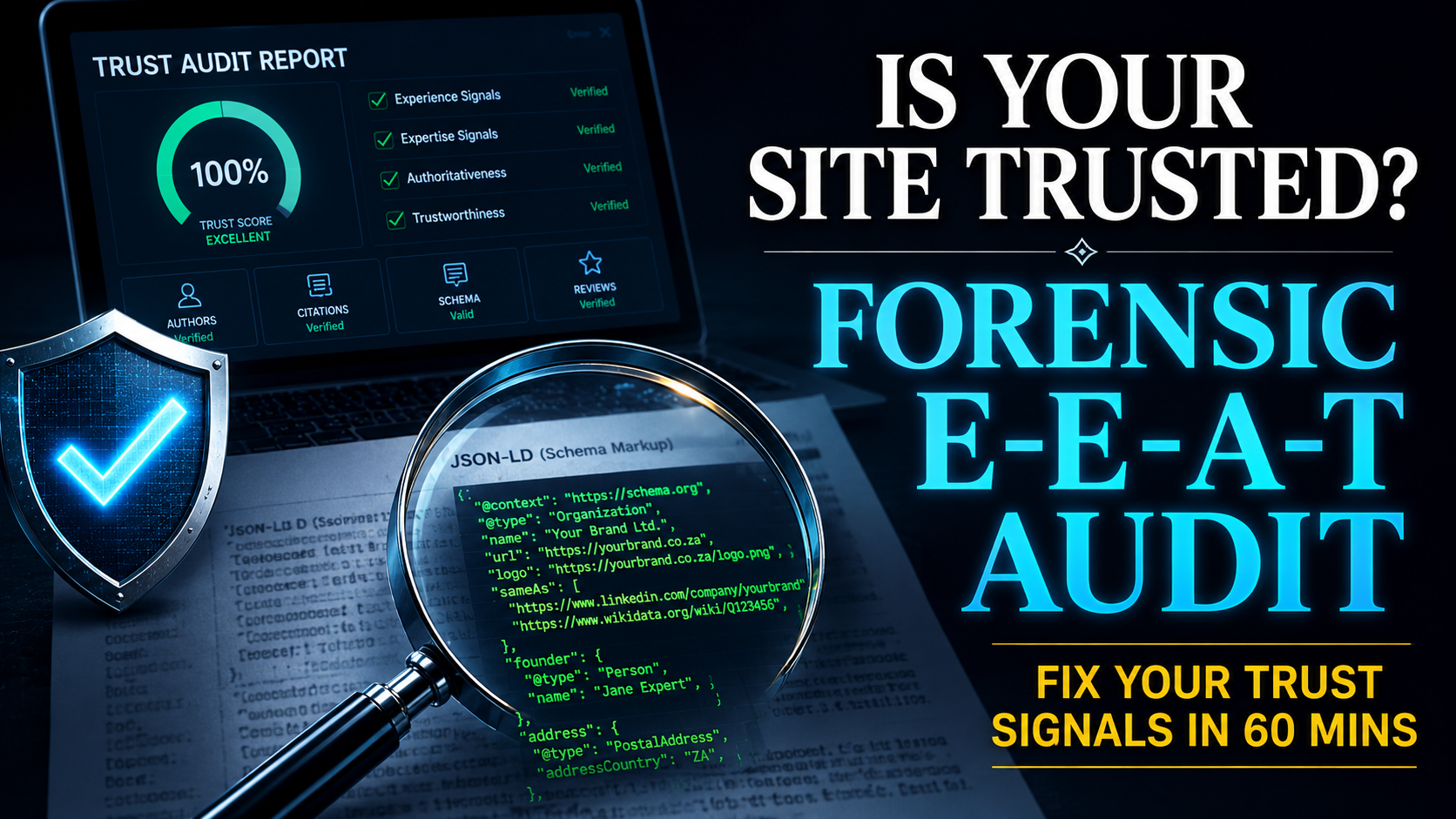
- The Fix: Ensure these details aren’t just images—they must be marked up with JSON-LD Schema. Your website needs to tell the machine, in structured data, exactly who you are, where you are located, and which professional bodies you belong to.
4. Policy & Ethics (15 Minutes)
For high-trust industries, silence is suspicious.
- The Audit: Look for clear disclaimers on your site. Do you have an editorial policy or a disclaimer regarding the scope of your professional advice?
- The Fix: Add a “Transparency & Ethics” section to your site. Outline your commitment to factual accuracy and provide a clear disclaimer that states your content is for educational purposes and does not constitute a binding professional contract.
The “Expertise Mapping” Shift
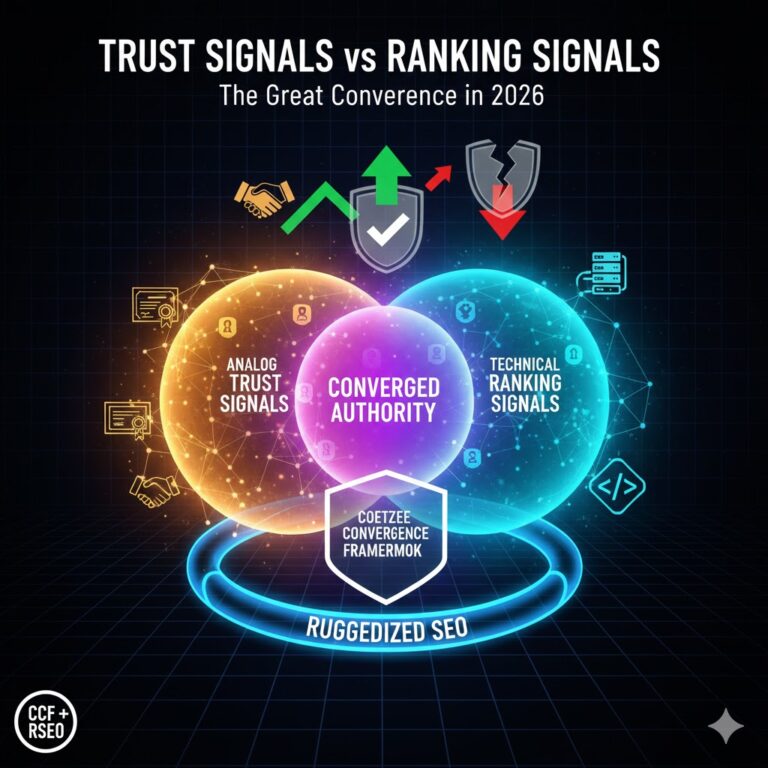
The fundamental shift in 2026 is that Google no longer treats “content” as a commodity. It treats content as a testimony.
Google doesn’t just want to know that you wrote something; it wants to know that you are qualified to have written it. By mapping your professional credentials to your website’s entity data, you stop asking Google to “rank your keywords” and start forcing it to “recognize your authority.”
How We Do It at SEO Gurus
At SEO Gurus, we treat every site audit like a forensic investigation. We don’t just look for “better content”; we identify where your digital trust signals are broken or disconnected. We use technical auditing to turn your professional achievements into machine-readable data, ensuring that your E-E-A-T profile is as impressive to the AI as it is to your human clients.
Is your website passing the trust test, or is it failing to prove your expertise to the machines that run the search engines?
Reach out to our team today to schedule your comprehensive E-E-A-T and entity-mapping audit.