The “Dead-Weight” Landing Page: How to Prune Your Site for AI Crawlers
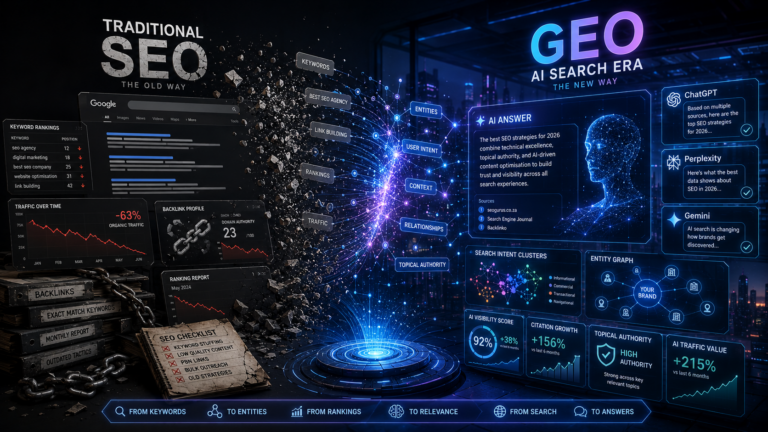
In the early days of SEO, a larger website was almost always better. If you had 500 pages, you theoretically had 500 opportunities to rank. Today, that logic is obsolete—and in the age of Generative Engine Optimization (GEO), it is actively damaging your visibility.
AI models like Gemini, ChatGPT, and Perplexity operate on a “compute budget.” They do not crawl your entire site indiscriminately; they prioritize sites that are lean, fast, and dense with high-authority information. If your website is bloated with legacy landing pages, thin content, and unoptimized assets, you aren’t just slowing down your users—you are effectively hiding your best content from the AI brain.
1. The “Compute Budget” Reality
Think of AI crawlers as a VIP guest at a museum. If your museum is a labyrinth of empty rooms (thin content) and broken exhibits (404 errors), the guest will get frustrated and leave before finding the masterpiece.
When your site is bloated, you consume your crawl budget on low-value pages. The AI spends its limited compute resources indexing junk, leaving it no bandwidth to properly “understand” and index the pillars of expertise that actually drive your business.
2. Identifying the Bloat: The “Dead-Weight” Audit
Before you start deleting, you must diagnose. Your site is likely carrying three types of dead weight:
- Thin Content: Pages with under 300 words that offer no unique value or original insight.
- Orphaned URLs: Old campaign landing pages or dated service offers that no longer link to your primary navigation.
- Legacy Assets: Heavy, unoptimized images, redundant JavaScript files, and unused CSS from previous design iterations.
3. The Pruning Protocol: A Three-Step Strategy
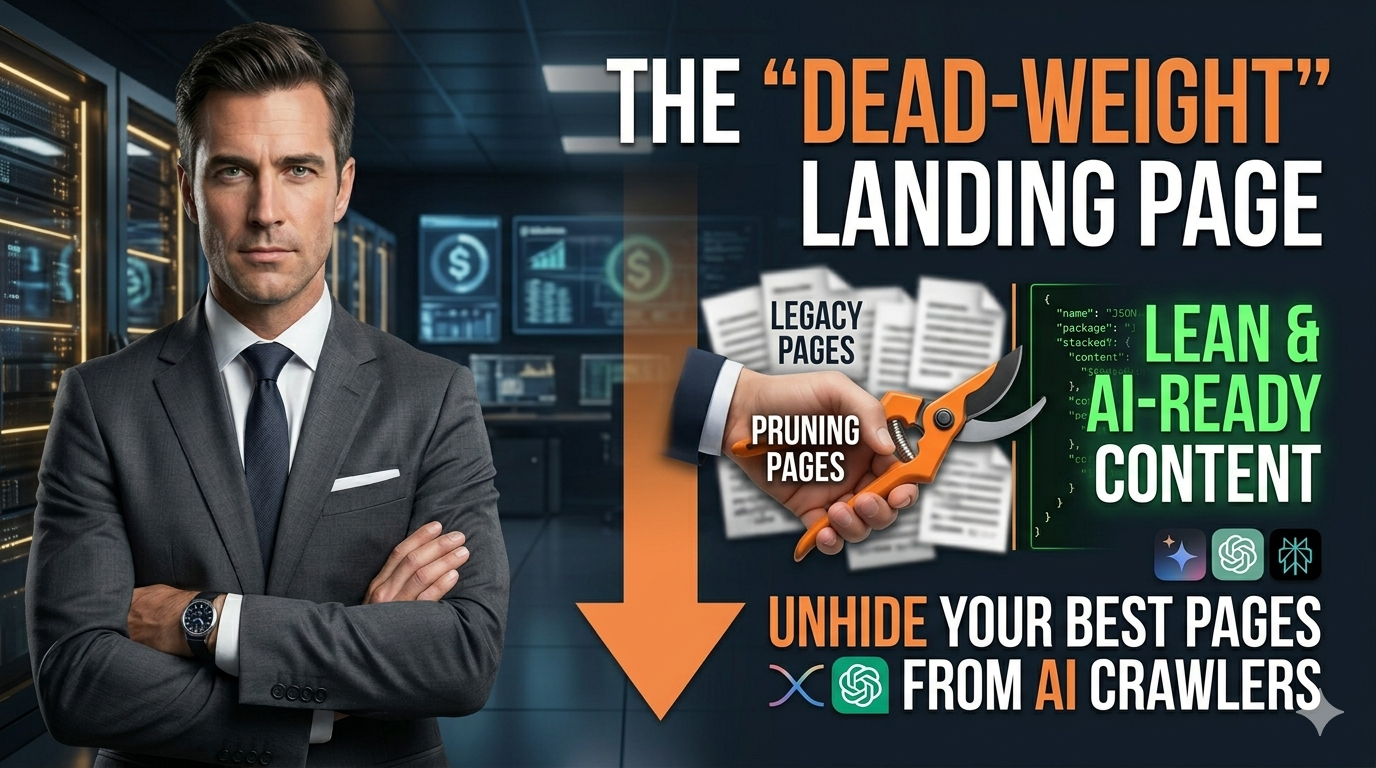
Pruning is a surgical process. You don’t just delete; you consolidate and optimize.
- Content Consolidation: Take your thin, fragmented pages and merge them into “Power Pillars.” If you have five short posts about jewelry security, consolidate them into one massive, entity-rich guide. This aligns with the Coetzee Convergence Framework (CCF), creating a single, authoritative node for the AI to reference.
- Asset Cleanup: If your site is built on WordPress, you should be using a lightweight stack like Kadence Blocks. Remove all “page builder bloat” and legacy plugins that add unnecessary overhead to your page payload. Every millisecond of latency is a tax on your crawlability.
- Strategic Redirects: When you delete a page, don’t just let it 404. Use 301 redirects to point the URL to the most relevant “Power Pillar.” This preserves your backlink authority and guides the AI toward your high-value content.
4. AI-Ready Architecture: Why Less is More
Modern search is about signal-to-noise ratio. A lean site allows the AI to clearly identify the relationships between your entities (people, services, products, and certifications). When you strip away the dead weight, you are essentially “wiring” your brand for the AI brain, making it frictionless for the model to synthesize your content into its answers.
Conclusion: Site Maintenance as Technical Necessity
Pruning your site is not a “marketing task”—it is an act of technical performance engineering. If you want to be the brand that the AI cites as the authority in your niche, you must treat your website as a high-performance asset, not a dumping ground for legacy content.
At SEO Gurus, we specialize in forensic pruning and site architecture. We don’t just build sites; we engineer digital infrastructure that is lean, fast, and optimized for the AI era.
Is your website performing at its peak, or is it weighed down by dead-weight pages that are hiding you from the AI?
Contact us today to discuss a site performance audit and get your infrastructure AI-ready.