Why Your Agency Fails Your Boardroom: A Blueprint for Digital Sovereignty
Executive Summary
The traditional digital agency model is fundamentally misaligned with the requirements of a high-stakes boardroom. While agencies prioritize volume-based vanity metrics—clicks, rankings, and traffic—the enterprise requires risk mitigation, structural integrity, and long-term asset accumulation. This misalignment is not merely an operational friction point; it is a strategic vulnerability that leaves your firm’s most critical digital assets at the mercy of external contractors.
The “Agency Churn” Problem: Incentive Misalignment
The prevailing digital agency model is built on the monthly retainer, a structure that incentivizes short-term activity over long-term strategic stability. Agencies are motivated to report on “success” that is easily manufactured—increased search volume or higher page views—rather than focusing on the systemic health of your digital presence.
For a firm in a high-trust, high-ticket industry, this “activity-first” approach is corrosive. It encourages a focus on content volume rather than entity authority, and it promotes superficial fixes that neglect the structural architecture of the site. When your digital strategy is managed through this lens, the agency becomes a recurring expense that delivers diminishing returns, rather than a strategic partner building institutional value.
Architect vs. Contractor: A Shift in Governance
The failure of the agency model stems from a misunderstanding of roles. Most firms hire “contractors” to perform tactical SEO tasks, hoping for a strategic outcome. This is a category error.
What the boardroom requires is an Architect.
- Contractors focus on execution: they produce content, build links, and submit technical fixes. Their work is often siloed and disposable.
- Architects focus on systems: they design the foundational protocols that govern your digital ecosystem, ensure data interoperability, and manage your entity’s reputation in the Knowledge Graph.
The Architect does not merely “do the work”; they provide the strategic blueprint that your internal team or specialized developers can execute. This shifts the focus from outsourced tasks to internal capability, ensuring that your digital strategy is woven into the fabric of your business.
The Case for Digital Sovereignty
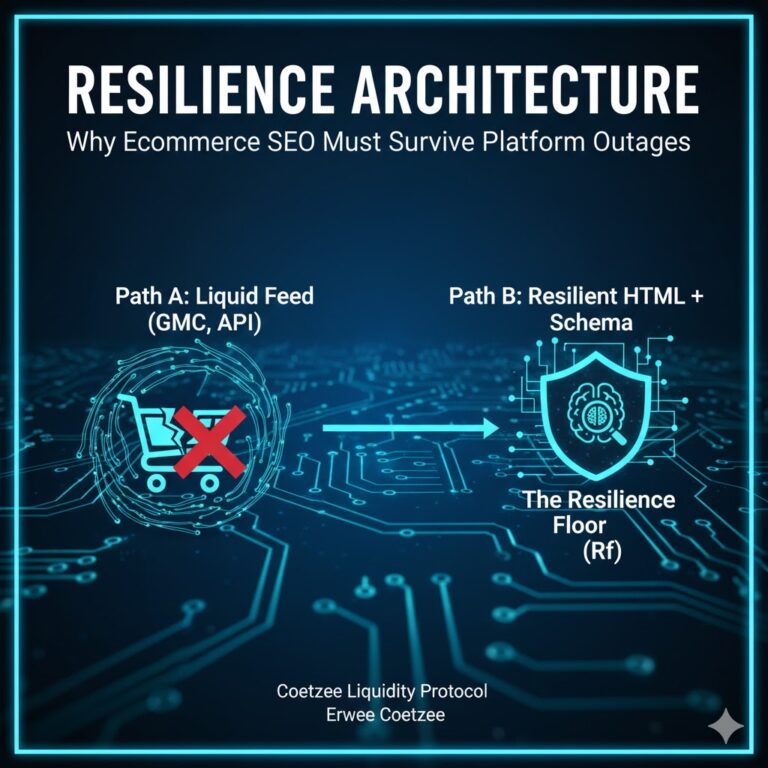
In the current economic climate, you cannot afford to outsource the keys to your digital kingdom. Digital Sovereignty is the practice of owning your stack—the data architecture, the schema, the technical foundations, and the entity footprint—rather than leasing it from a third party.
When you outsource your digital strategy without an architectural framework, you lose institutional knowledge every time an agency relationship ends. You are left with a site that is often optimized for the agency’s reporting tools rather than for your business’s long-term sustainability. Sovereignty requires that your technical protocols, your entity data, and your long-term roadmap remain under your control, ensuring that your digital footprint grows in value, not just in volume.
Toward an Architecture of Trust
Your firm’s digital presence should be an engine of stability, not a variable marketing cost. If your current engagement focuses on “reporting” rather than “governance,” you are effectively subsidizing your own digital obsolescence.
Request a Governance Consultation
The boardroom’s responsibility is to oversee assets, not to monitor marketing activity. If you are concerned that your firm’s digital assets are being managed without an architectural blueprint, we invite you to request a private governance consultation. We provide the forensic analysis necessary to determine if your current setup is a strategic asset or a compounding liability.