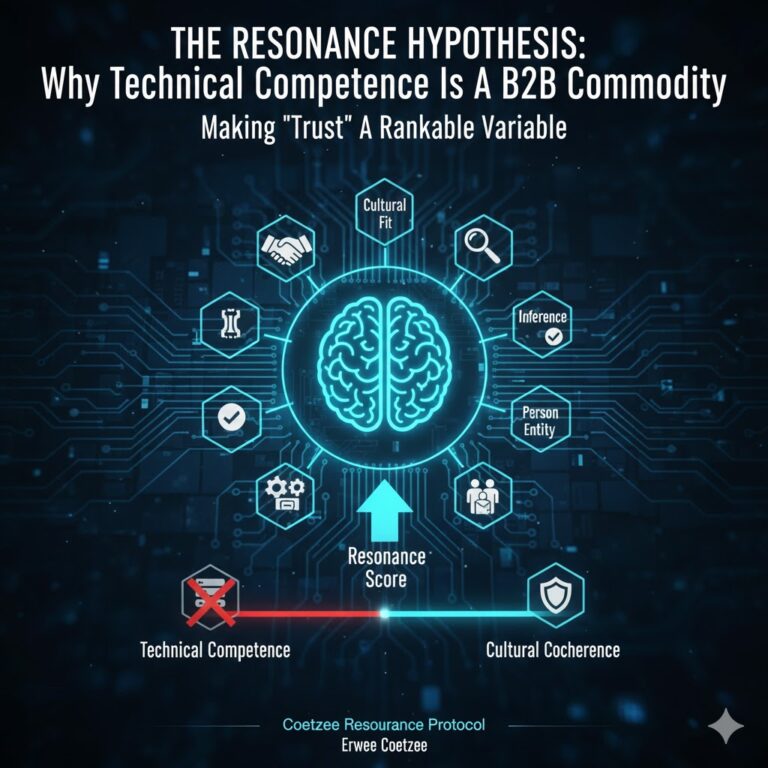
Beyond Rankings: Transforming Your Brand into a Trusted AI Entity
Executive Summary
The era of the “blue link” is coming to a definitive close. In the modern search landscape, ranking number one on Google is no longer the endgame; the true objective is to become the trusted answer within the generative summaries of platforms like Gemini, ChatGPT, and other LLM-based interfaces. To remain visible, brands must abandon the antiquated pursuit of keyword volume and begin the transition toward building high-trust, machine-readable “Entities.”
The Entity-Knowledge Gap
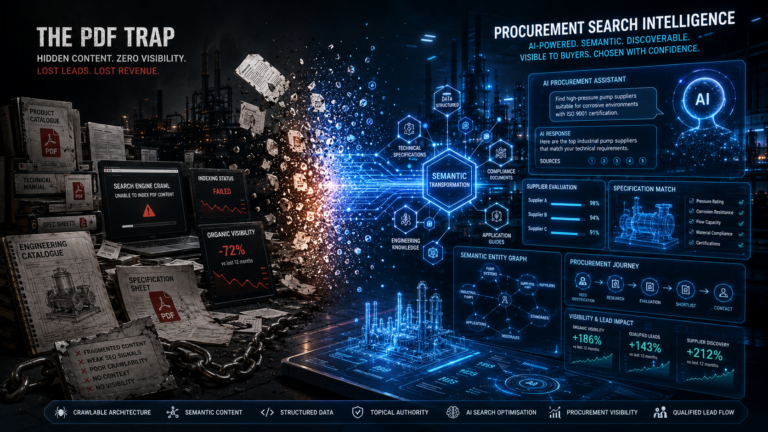
There is a fundamental disconnect between how traditional agencies operate and how modern AI processes information. Traditional SEO focuses on optimizing web pages for specific keyword strings, but Large Language Models (LLMs) do not “read” pages in the traditional sense. Instead, they synthesize vast datasets to map “entities”—people, places, organizations, and concepts—and the semantic relationships between them.
If your brand is not recognized as a distinct, authoritative entity within a Knowledge Graph, you are effectively invisible to the AI that is increasingly providing the answers for your industry. A “page that ranks” is a relic of the search-engine-optimization era; an “entity that is trusted” is the foundational requirement for the generative-engine-optimization era.
The Architecture of AI Trust
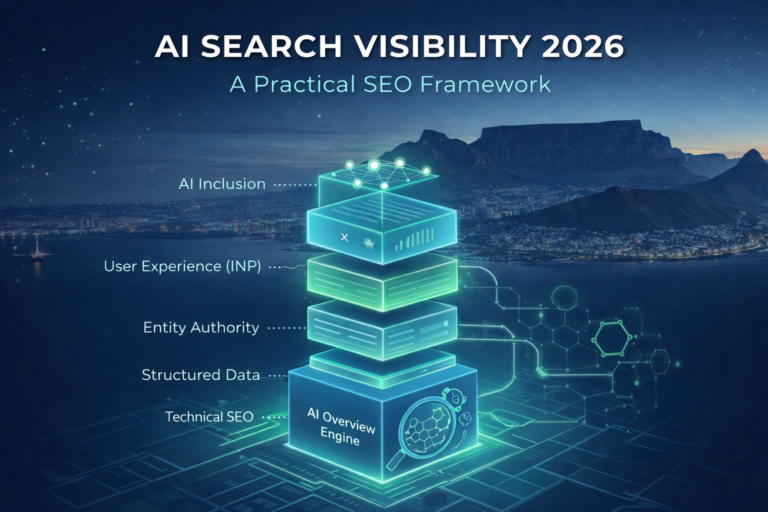
To achieve “AI-Readiness,” a brand must provide clear, structured signals that remove ambiguity for machine learning models. This is not about content creation; it is about data engineering. The building blocks of an AI-trusted entity include:
- Schema Architecture: Implementing rigorous, nested schema markup that defines your brand’s role, services, and relationships in a language machines can parse natively.
- Disambiguation: Ensuring that your brand has a unique, verifiable digital footprint that cannot be conflated with competitors or unrelated entities.
- Citation Consistency: Maintaining an immutable record of brand data across the web, creating a verifiable provenance that reinforces your status as a “known entity”.
- Proprietary Data: Feeding the AI synthesis engine with consistent, accurate information that positions your firm as the definitive source of truth in your specific industry.
From SEO to GEO: The Coetzee Convergence Framework
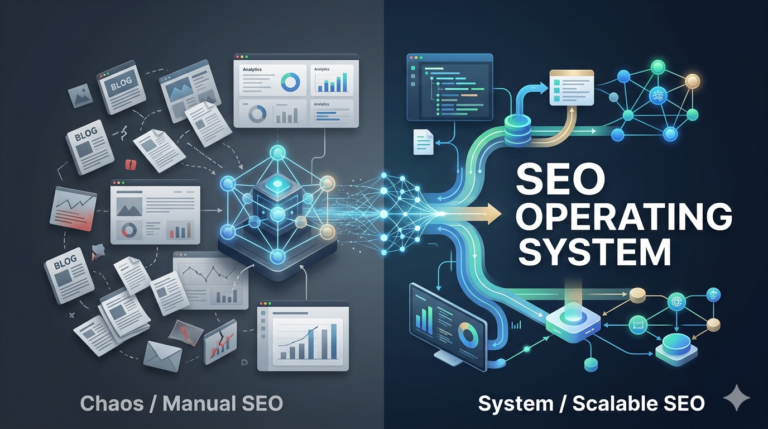
The shift from SEO (optimizing for traffic) to GEO (optimizing for reputation and accuracy) is where the Coetzee Convergence Framework (CCF) provides a distinct advantage. The CCF is a protocol for operational digital solvency, designed specifically to align an organization’s digital architecture for machine-readability.
By focusing on GEO, we move away from the volatile nature of algorithm-driven traffic and toward a strategy of entity dominance. When the AI is asked a question regarding your sector, the goal is not to have your link displayed in a list of results, but for your entity to be cited as the authoritative answer. This requires a transition from “marketing as a cost” to “entity architecture as a strategic asset”.
Toward an Architecture of Accuracy
Your digital presence is no longer just a storefront; it is a training set for the future of search. If your current digital strategy is still focused on chasing rankings, you are optimizing for a version of the web that is rapidly disappearing.
Request a Brand Entity Assessment
Is your firm currently recognized as a trusted entity by the leading generative models, or are you operating in a state of digital anonymity? Request a private Brand Entity Assessment to determine your firm’s current AI-Readiness Score and begin the transition to a sovereign digital architecture.